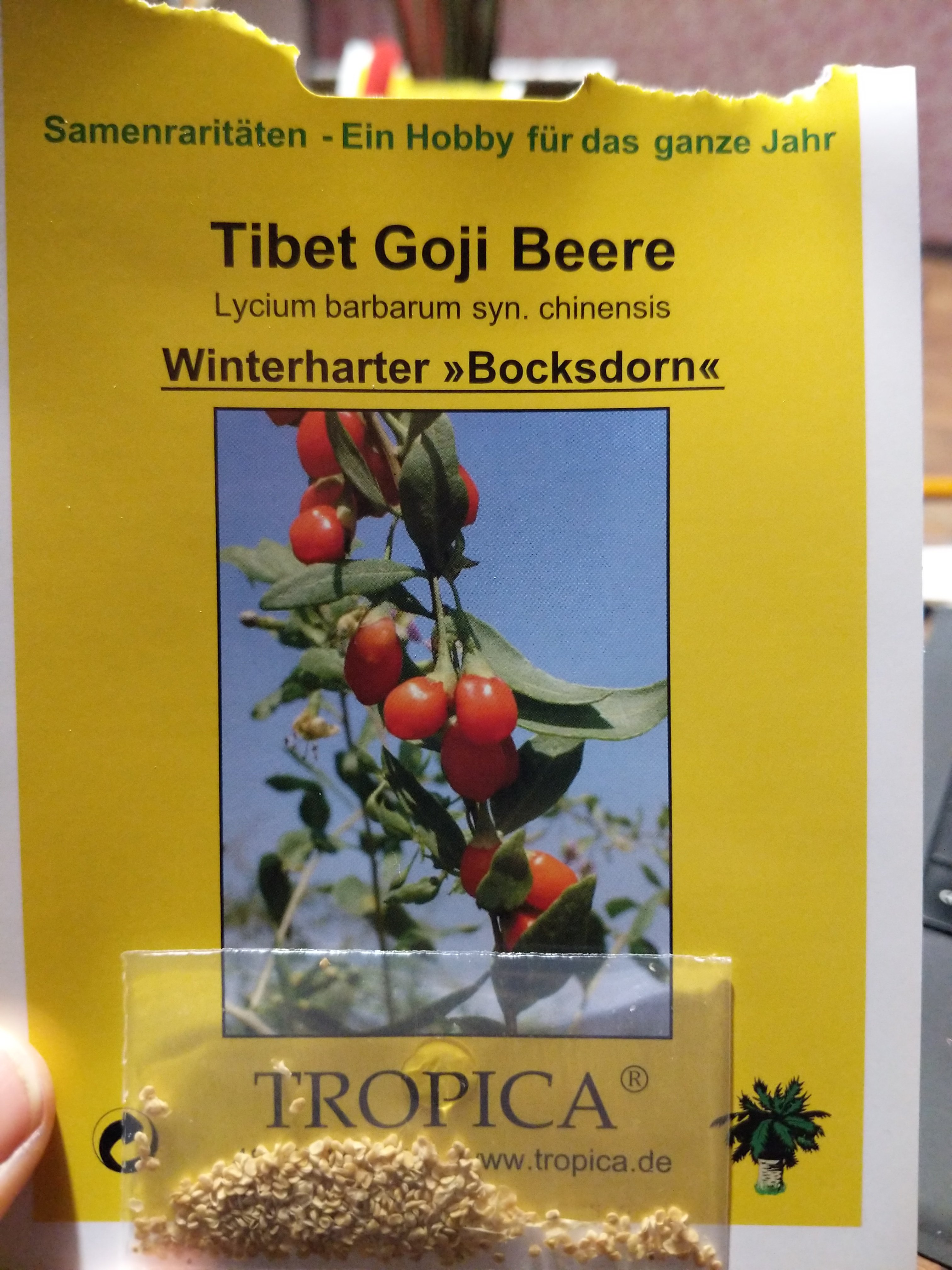
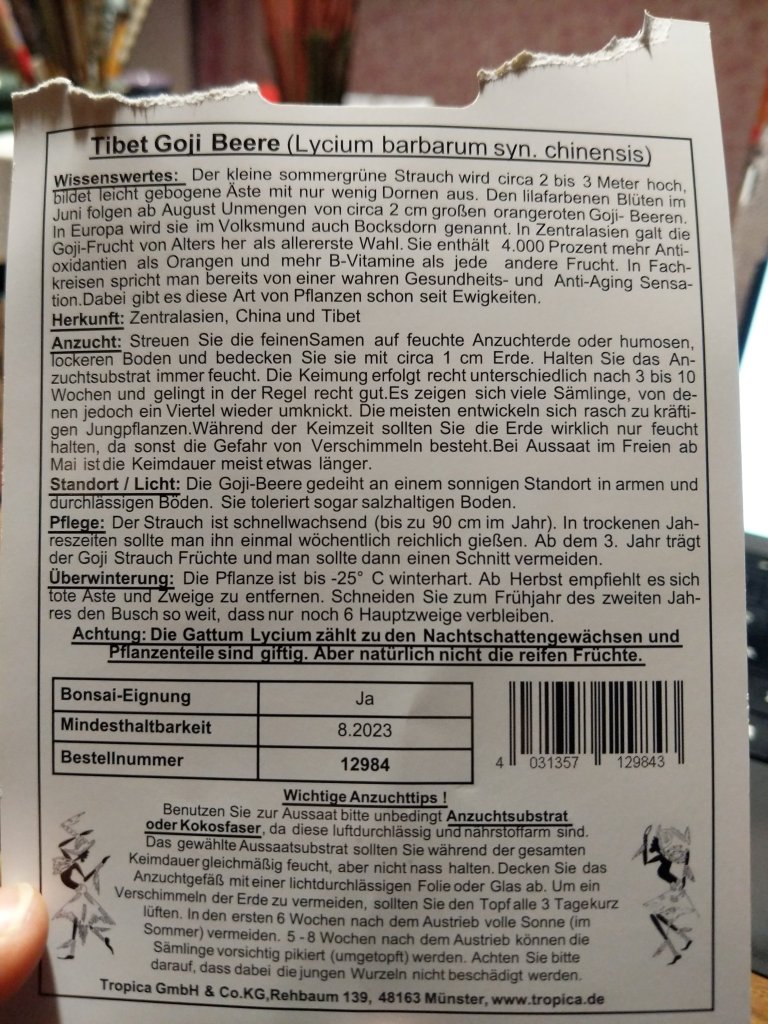
Translated from TROPICA for Tibet Goji Berries (Lycium barbarum syn. chinensis), with original photo in German below:
“Interesting facts: The small deciduous shrub grows to a height of around 2 to 3 meters and forms slightly curved branches with only a few thorns. The purple flowers in June are followed by tons of orange-red Goji berries of around 2 cm in August. In Europe it is popularly called wolfberry. In Central Asia, goji fruit has long been the first choice. It contains 4,000 percent more antioxidants than oranges and more B vitamins than any other fruit.
Origin: Central Asia, China and Tibet.
Growing: Sprinkle the fine seeds on moist growing soil or loose soil and cover them with about 1 cm of soil. Always keep the growing substrate moist. The germination takes place very differently after 3 to 10 weeks and is usually quite successful. There are many seedlings, however, a quarter of them buckle. Most quickly develop into vigorous young plants. During the germination period, you should really only keep the soil moist, otherwise there is a risk of mold. When sowing outdoors from May, the germination time is usually somewhat longer.
Location / light: The goji berry thrives in a sunny location in poor, permeable soils. It even tolerates saline soil.
Care: The shrub grows quickly (up to 90 cm a year). It should be watered abundantly once a week in dry seasons. From the 3rd year the Goji shrub bears fruit and you should avoid a cut.
Wintering: The plant is hardy down to -25 ° C. From autumn it is recommended to remove dead branches and twigs. In spring of the second year, cut the bush so far that only 6 main branches remain.
Warning: The Lycium Genus is one of the nightshade plants. Parts of plants are poisonous, but of course not the ripe fruits.
Bonsai suitability: Yes.”
 Waunder