1. Hoopoe
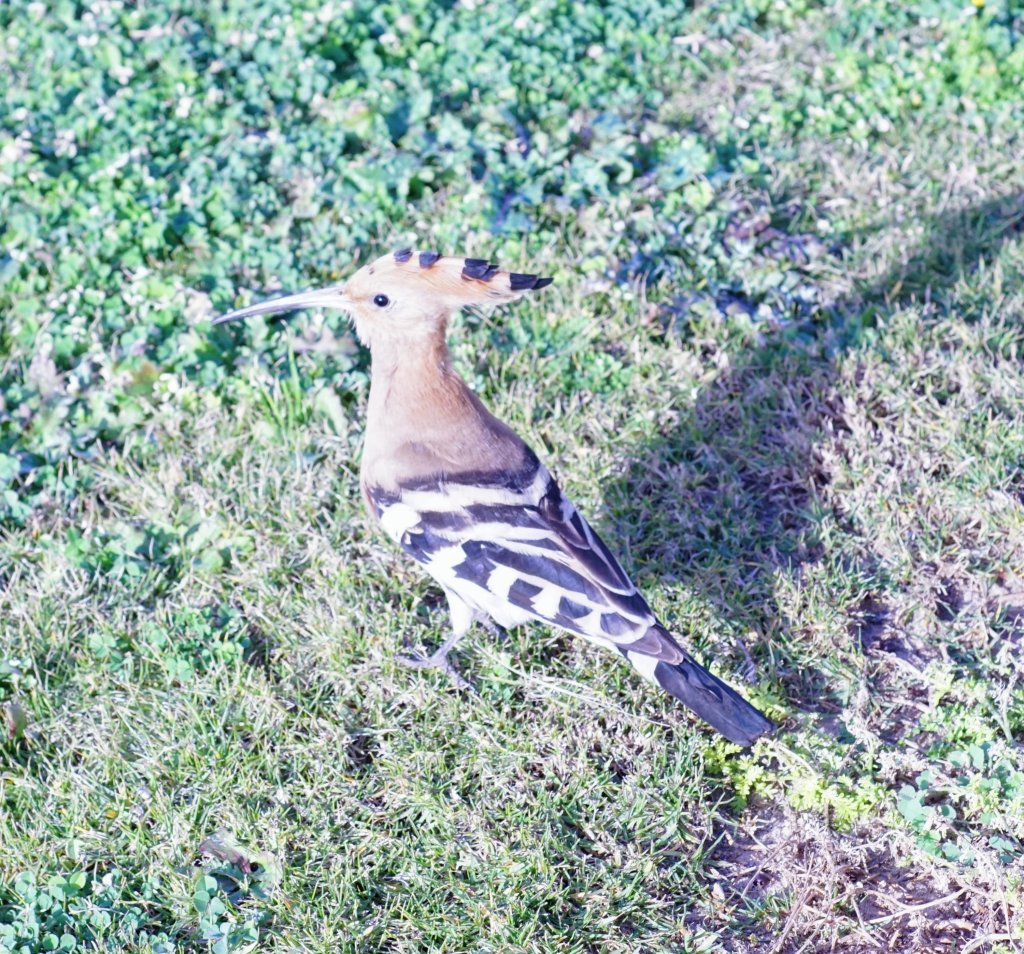
I was walking along the beach in Tel Aviv when a stunning bird caught me by surprise. It had a hammer-like plume on its head, with a brown chest coupled with black and white stripes on its wings. This Hoopoe – Upupa epops turned out to be the state bird of Israel.
I walked it hop around the grass near a palm tree, poking its long and curved beak into the ground to look for insects. It may have also been eating the palm fruits, but it was more likely to have been an insect when it cocked its head up from time to time.
The name in Hebrew is “duhkhifat” although when I put it through google translate, I am a bit confused when the english word appears to mean “tableclothe.”
2. Tristam’s Starling
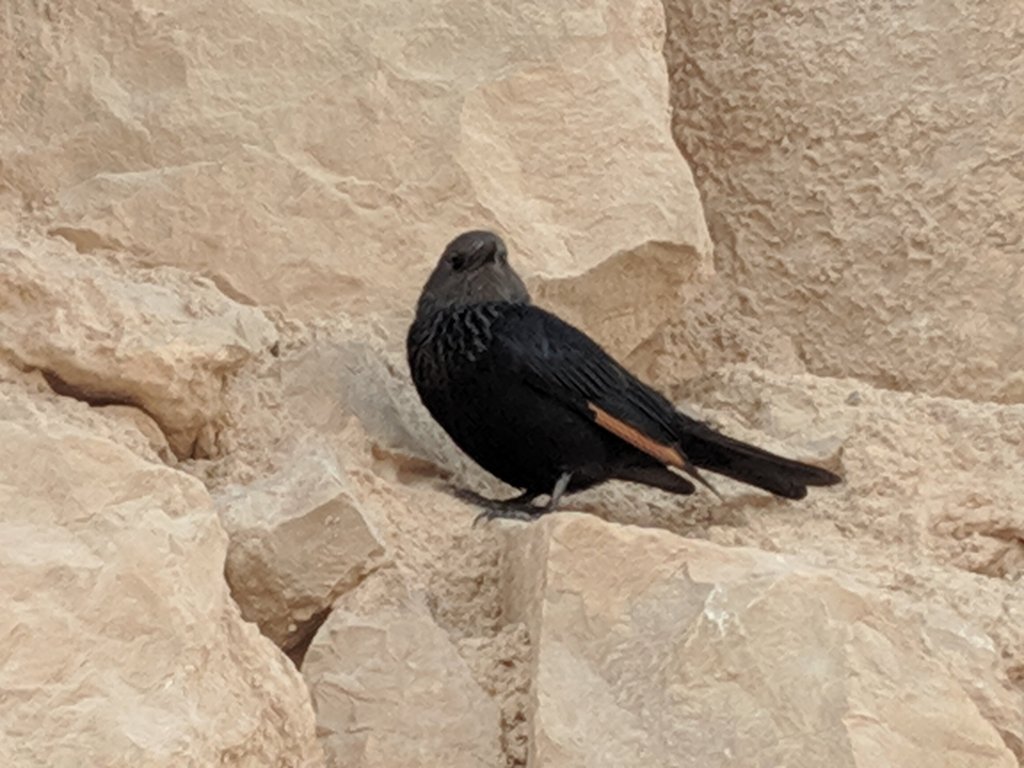
On a trip to Masada, the ancient Roman city on a high plateau, I was stunned to hear a delightful song coming from a black bird with orange under-wings flashing brightly in flight. The Tristam’s Starling – Onychognathus tristramii, inhabits the desert near the Dead Sea, finding a home in the mountains, most likely fed by tourists taking the tram up for a tour. The Hebrew name is “tristramit”
3. Hooded Crow
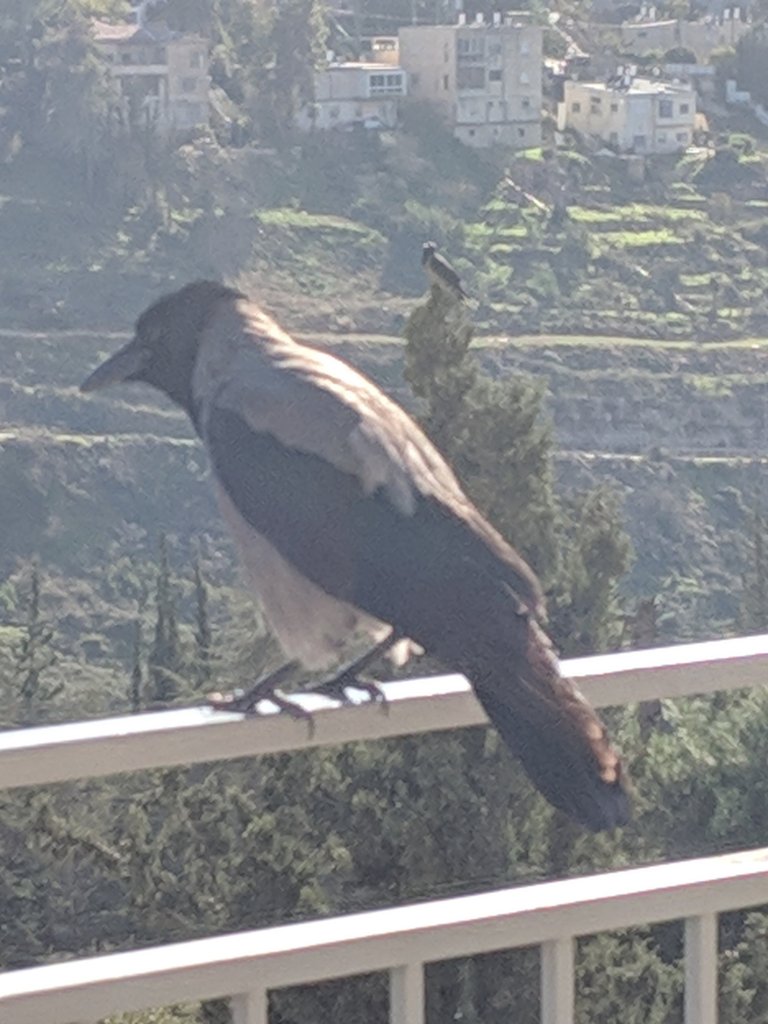
Another frequent feature of Tel Aviv is the Hooded Crow – Corvus corone cornix – spotted with a patch of gray around its neck and chest like a hooded coat. The photo below was snapped on the balcony at Yad Vashem, where the bird appears to adopt the solemn demeanor of the tour. The name in Hebrew is “orev afor.”
4. Common Myna
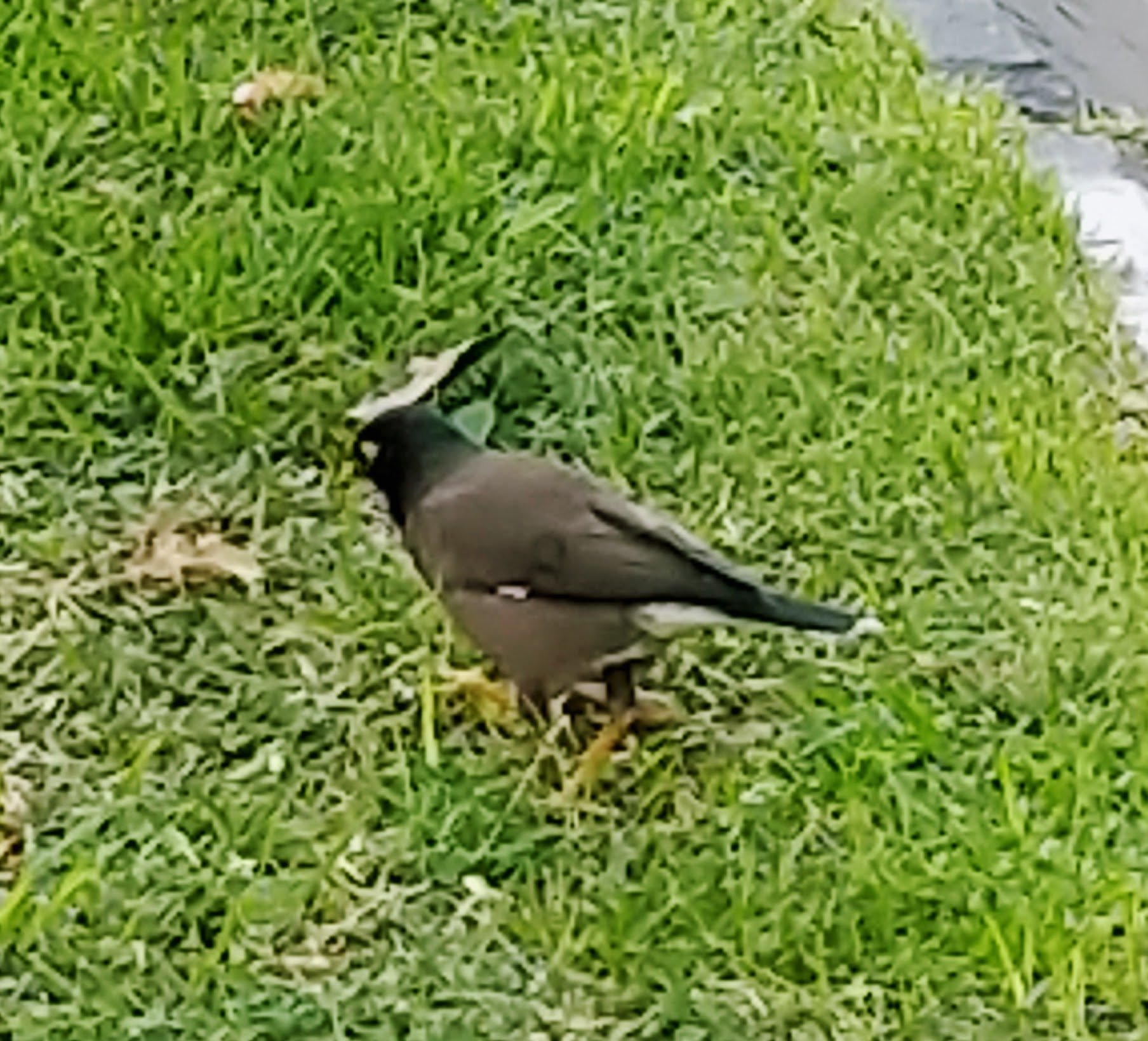
Finally, the most “common” bird I’ve seen is the Common Myna – Acridotheres tristis. The name in Hebrew is “maina metzuya.”
They are distinguished by an orange circle around the eye (I’ll have to snap a better picture than the one below). But they also appear to be a grayish brown with a strip of white on both the outer wing and beneath the tail.
They frequently congregate on grass looking for grubs, and line the grass on the beach boardwalk as the many fitness enthusiasts run, jog, walk, bike, or scooter on by. Based on my pocket guide, they were originally from India but escaped from cages and spread.
 Waunder