1. Roman Snail
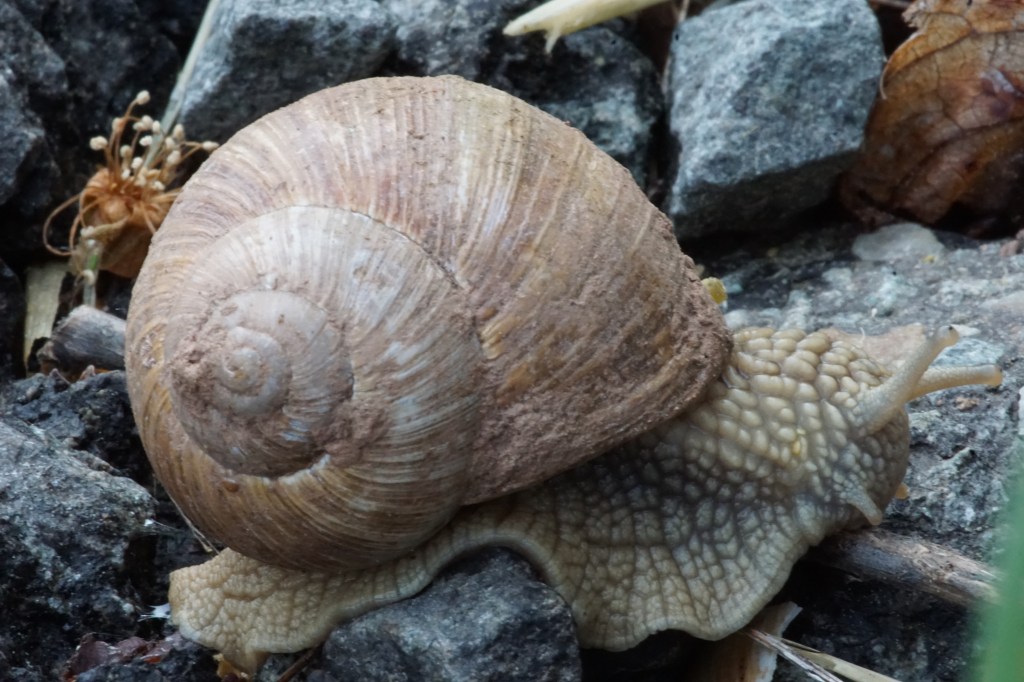
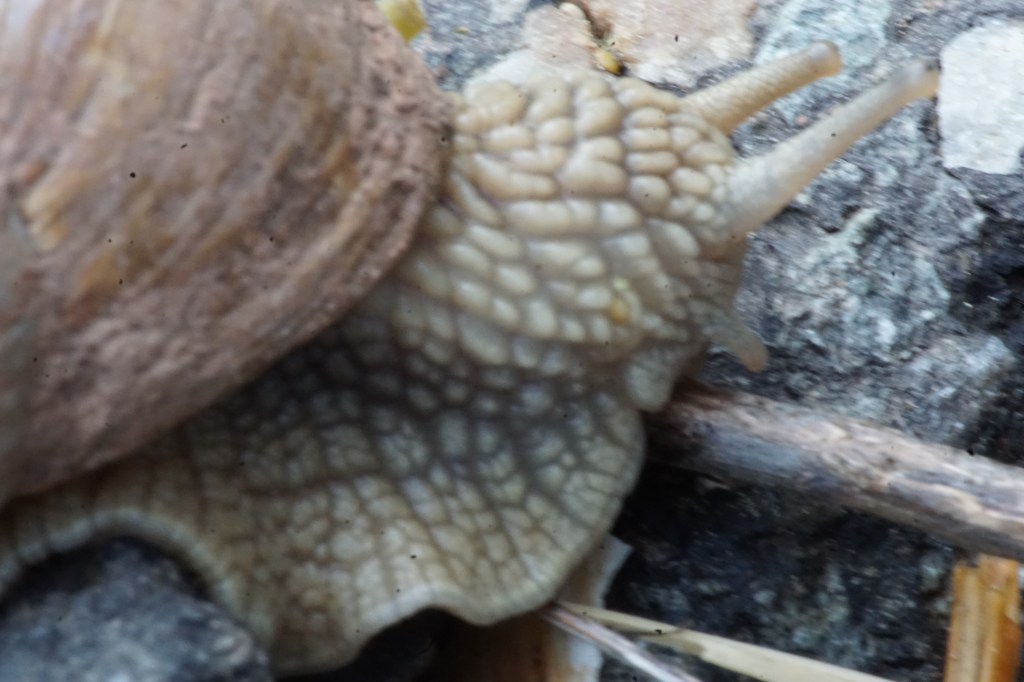
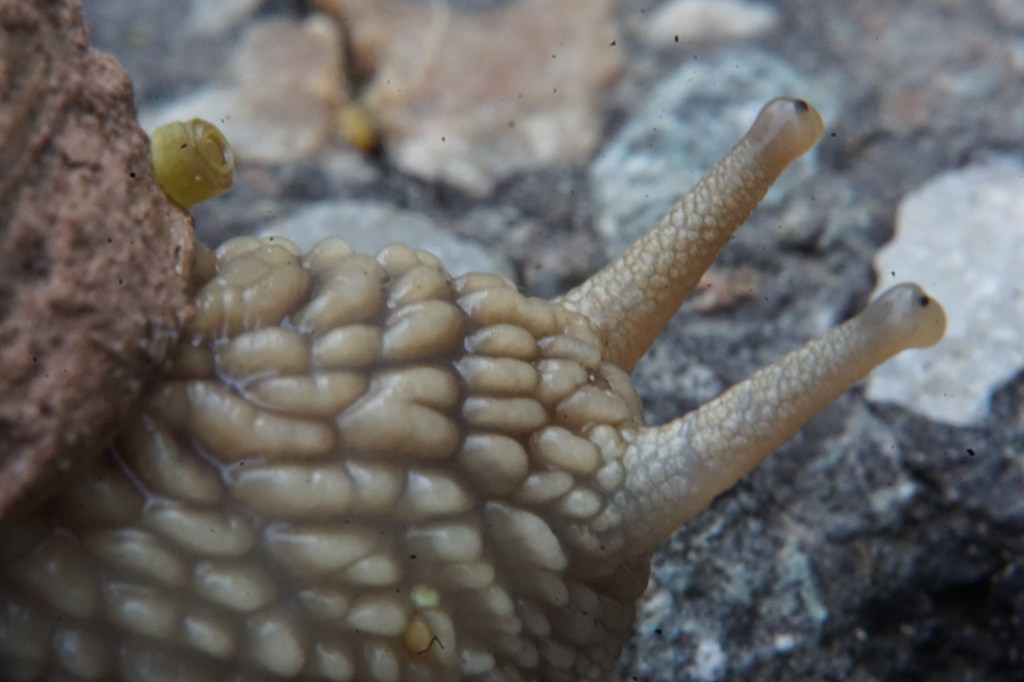
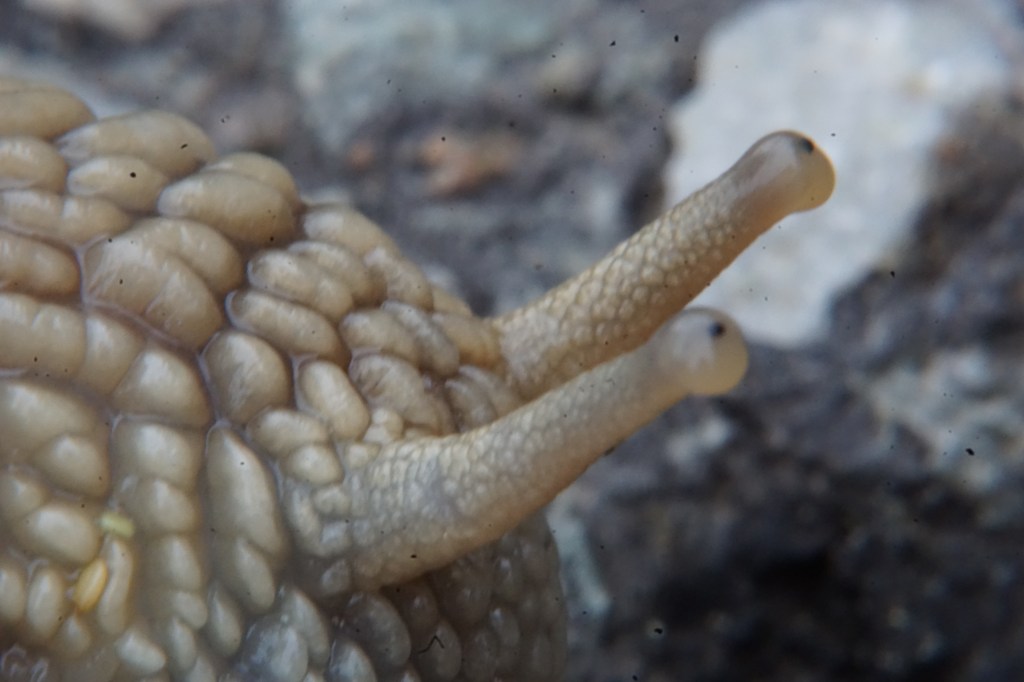
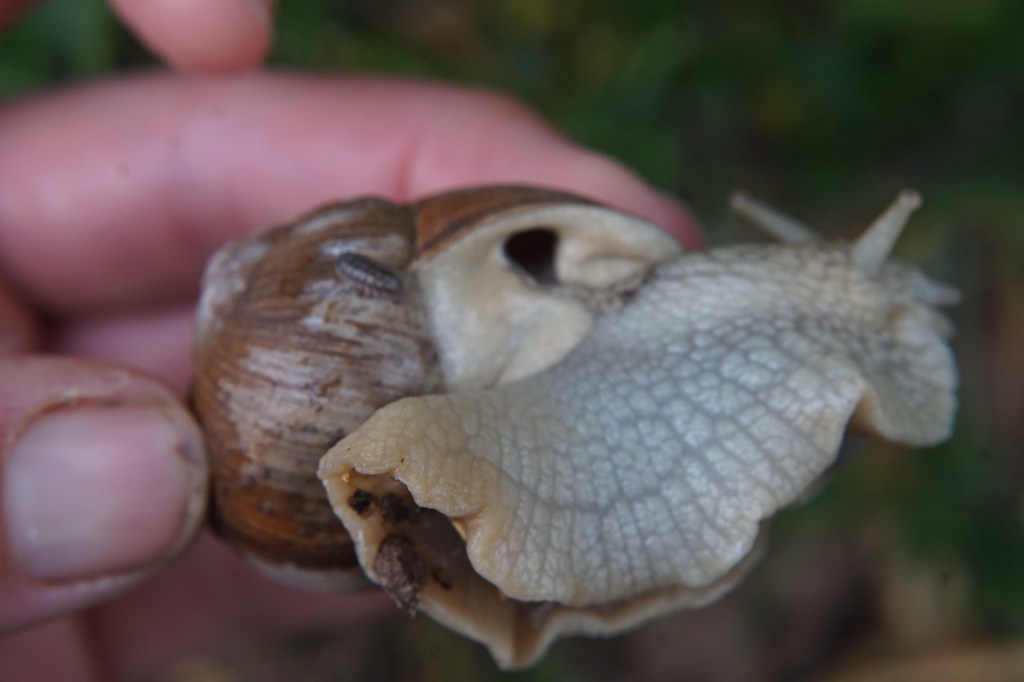
Spotted during the rainy days of April, this gastropoda snail is called Helix pomotia (Family: Helicidae) and is apparently edible as a form of escargot; however, it’s listed as protected in Germany under the Bundesartenschutzverordnung. Apparently, they mate at the end of May and lay their eggs in June and July.
There’s been much debate about the yellow barnacle on its shell, but I’d like to think that it’s a bauble or decoration for this elderly snail. But yes, apparently snails live up to 35 if given a good environment, with deaths occurring during dry summers and freezing winters.
These he/shes (they’re hermaphrodites) were stuck on gravel that had just dried out, with a colony of about 20 venturing out onto a walking path were at least one was crushed by some unobservant passerby. I picked them all up and put them back in the bushes as it isn’t supposed to rain until at least the next day. There were several generations present, with the youngest in shells the length of 2 cm, and others in between.
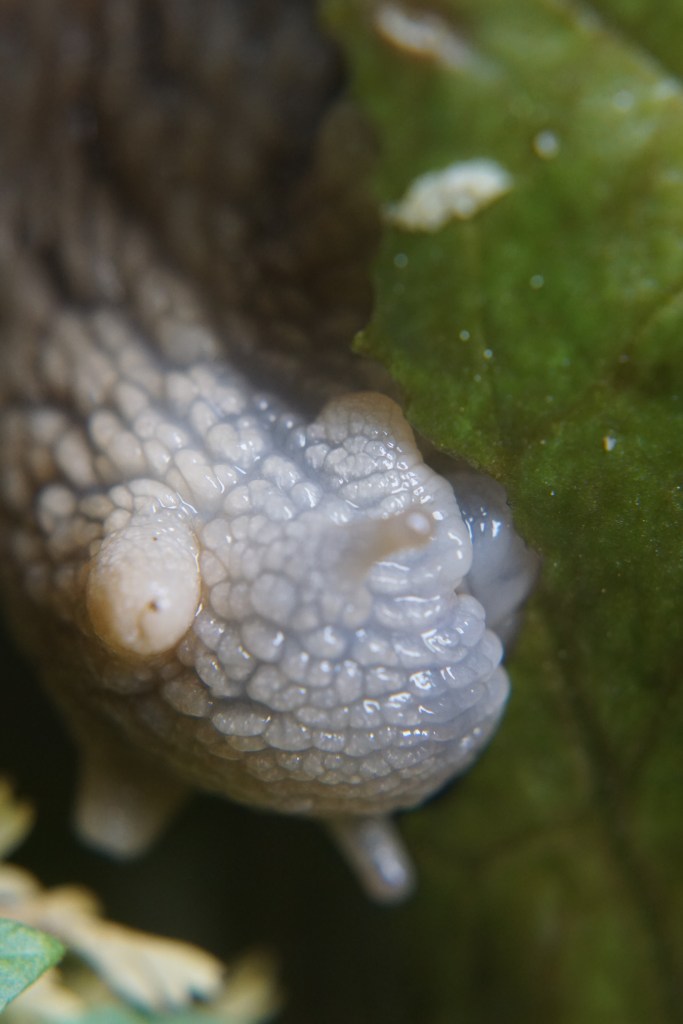
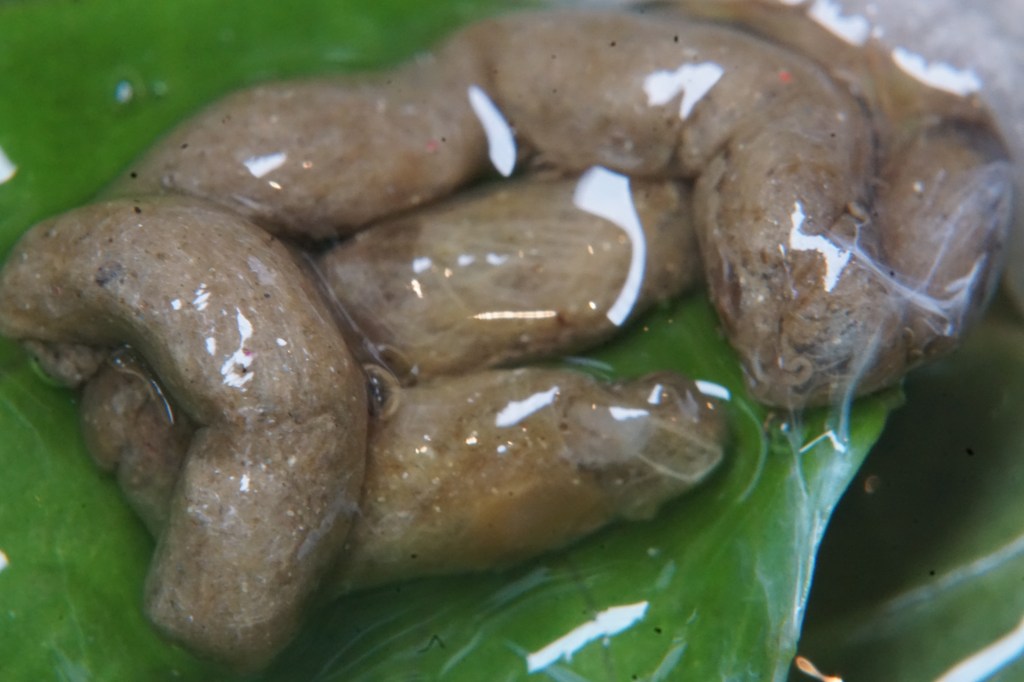
I did take one that I found in my garden inside for a couple days to observe. I learned that they are more active at night, so I rushed down as I was falling asleep to see him already climbed out of the bowl, so I put him outside. But truly, if you ever have a chance to feed a piece of lettuce to a snail, you will be so surprised to hear the sound of its mouth eating! I have a picture below that shows what looks like a version of teeth. It happily produced some excrement, which I mildly apologize for showing on this page.
2. Brown-Lipped Snail
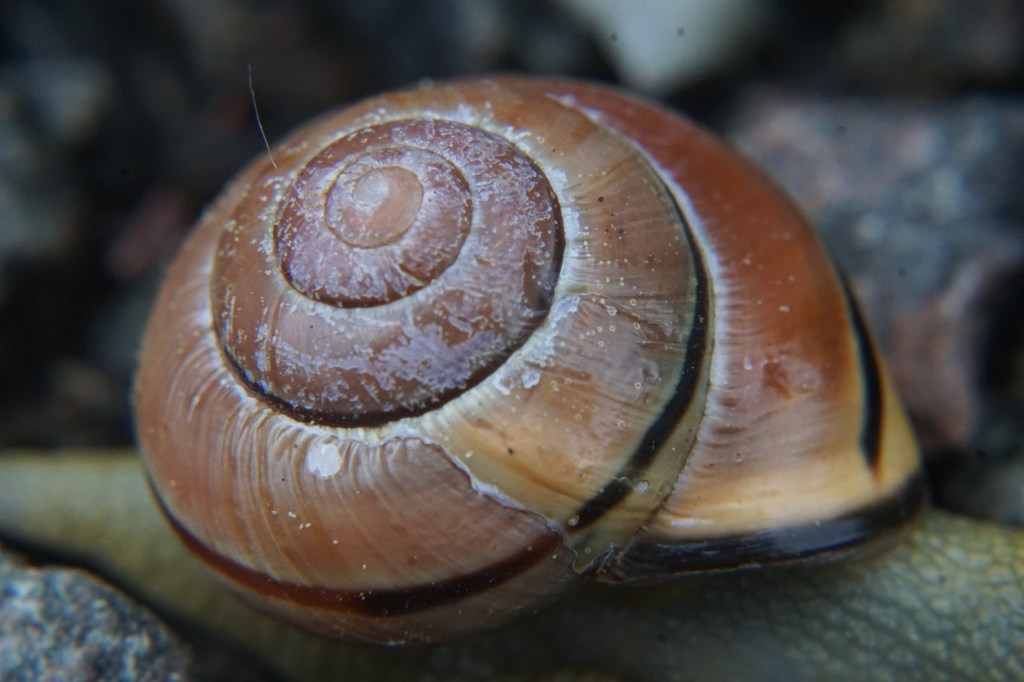
Cepaea nemoralis – Also known as the Grove Snail, this is the most common land snail in Europe. When you see the brown ring around the neck, it makes sense why it’s more commonly known as the “Brown-Lipped” snail. They only live to be 7-8 years old, with only half of the 30-50 eggs surviving each year. They were living in the same bushes as the Roman snails above, but apparently is the best snail home in the entire neighborhood from what I’ve seen so far.
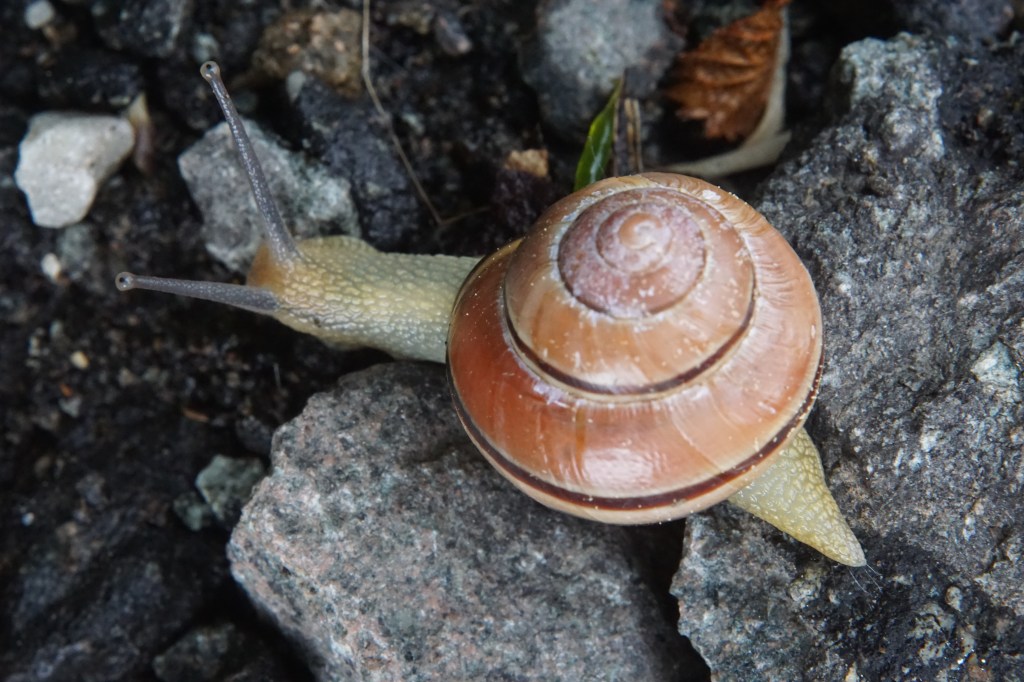
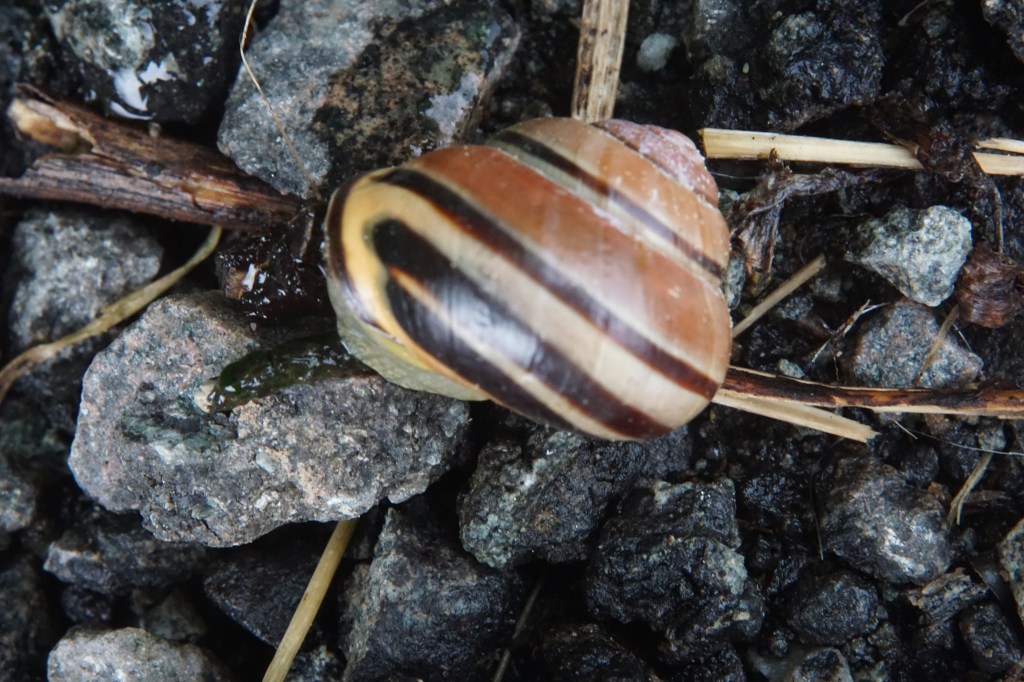
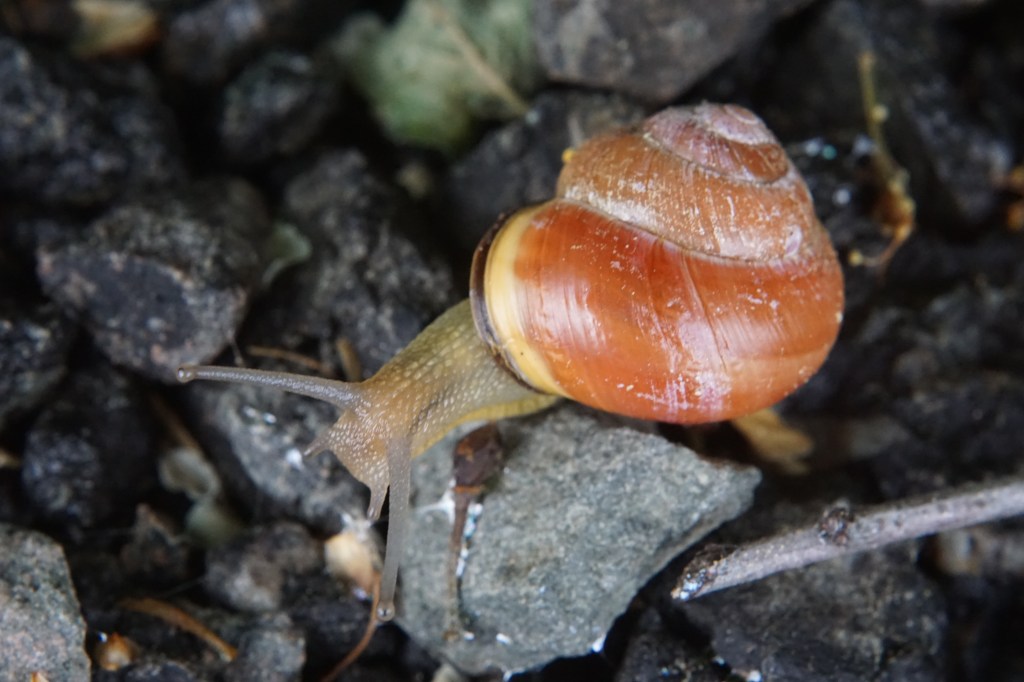
3. European Red Slug / Chocolate Arion
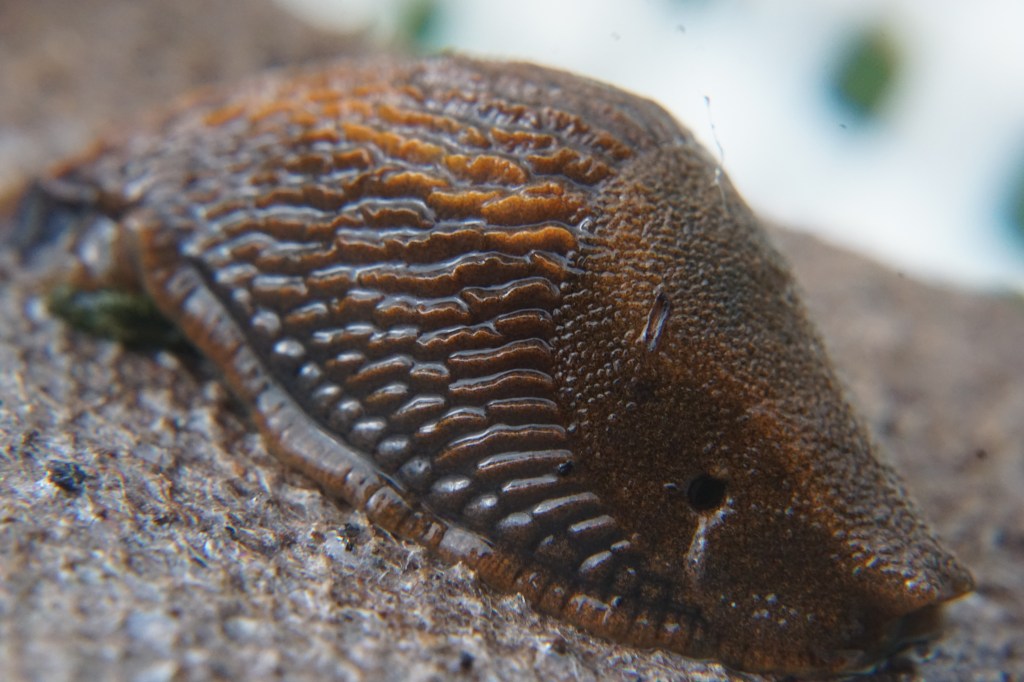
This Arion rufus was found in my garden, and while it may actually be a similarly looking Arion vulgaris (Spanish Slug), I wasn’t going to dissect it to find out. I had some fun asking my German neighbor’s kid if he’d seen any “schecke” around recently, as these are called “Wegschnecke” or “Nacktschnecke” for rufus & vulgaris. I might have found both based on the pictures below, but haven’t yet learned how to tell them apart.
As you can see, it has a respiratory pore in the front part of the mantle on its round back and a foot fringe that is vertically striped, with a different color than the back. In late summer, I found a mating pair with what I believe is a blue penis in between.


 Waunder