
In the last two months, I’ve regretted every moment that I went outside without a camera. It’s since become a permanent feature on my head-swiveling shoulders.
What I learned was first, exhausting. Catching bees up close is a spirited chase followed by followed yogic postures involving squats, planks, and lunges.
I definitely didn’t appreciate what effort it took to not disturb their work back when I was young, when I wandered through the school yard with a cylindrical bee catching net to inspect them closer among the green and pink-flowered ice plants.
I honestly didn’t expect to find so much. Bees are those cartoonish black and yellow jail-striped coats with buzzing wings and cute button-topped antennae, smiling at us, making us believe that their work is only to make us happy.
But then came the discovery of a Hoverfly sipping on the nectar of a cherry blossom. And a wasp invading my home. Each time I assumed it was a bee: black & yellow streaks of light.
Seeing things up close gave me new insights. A way to get closer to their world. To see intricacies of life begetting life. So with no further ado, let me introduce you to the first and most widespread bee in my country village in SW Germany, followed by the other amazing creatures inhabiting both my yard and the nearby world beyond.
Mining Bees
Mining bees have the widest range of fur and color patterns than any other genus — to be fair, they also have the largest number of species in this genus, with 50 examples provided in my Field Guide book. They nest in light soils, whether on a flat trail, a slope influenced by rabbit digging, or soft mortar of vertical walls; although the German word is just “Sandbienen” for its tendency to dig into the sand.

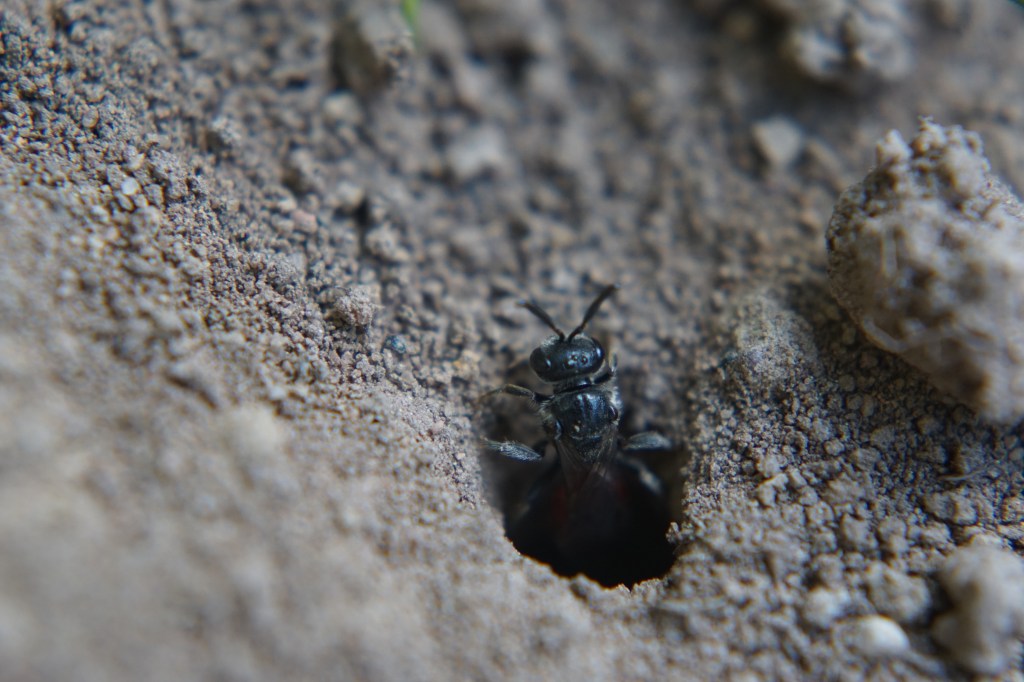
I’ve included several pictures of an unknown species of Mining bee for a couple reasons. First, these pictures show you what I DON’T have to make a good identification. Secondly, identifying bees while they are working makes it much more difficult to capture the colors behind all the pollen.
In the photo above, it shows a white tuft of hair on the head and orange-red hair on the thorax (the chest), however, it doesn’t show the color and size of the abdomen (the butt).
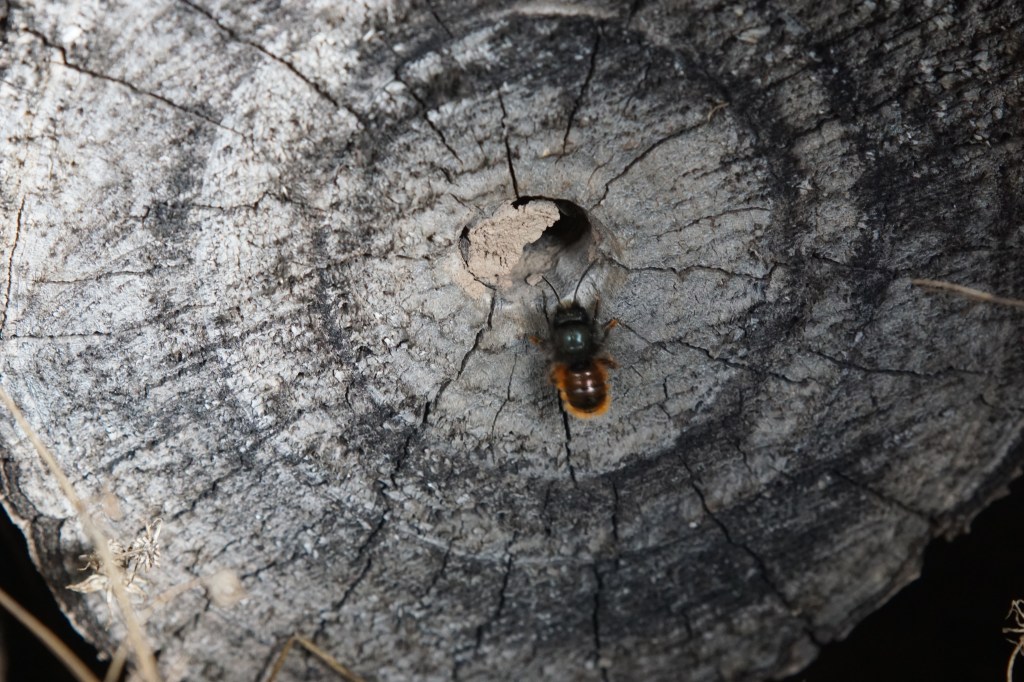
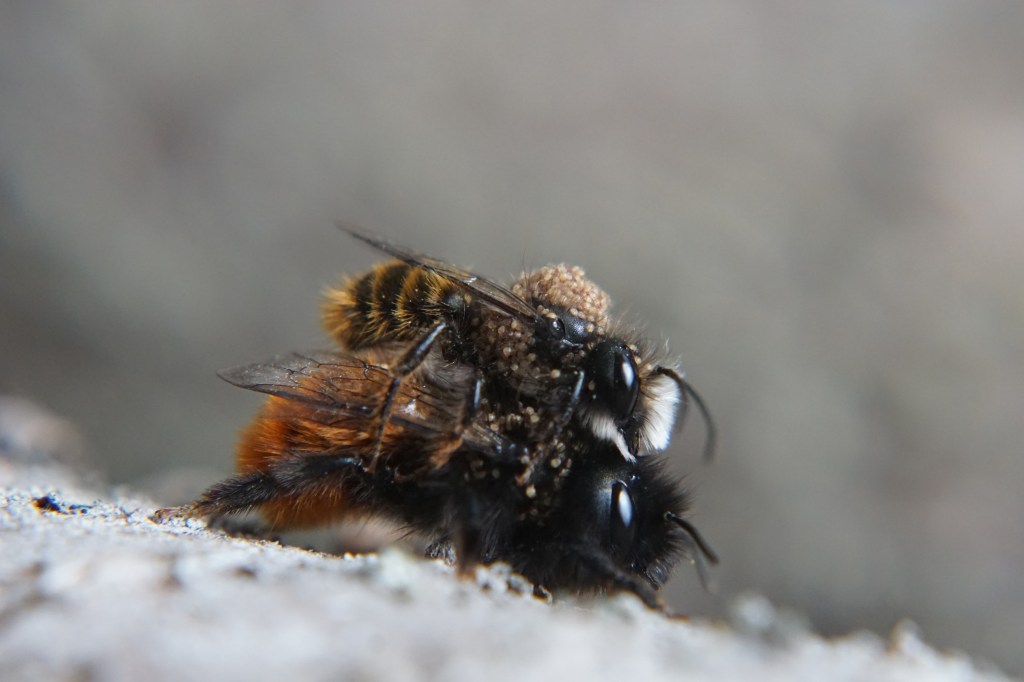
In the photos below, it shows white and orange hairs on the thorax; however, I can’t see how big, rounded or pointed the abdomen is, and whether the lines are creases or are patterned with a faded color of hair. The third photo highlights some of white hair in between the thorax and abdomen, but it’s still not enough to make an ID without having a clear shot of the thorax.


…I’ll try my best to get a better shot and identify while they are so active this month.
Sandpit Mining Bee
Like the black-tailed mystery bee above, many bees do not have what we think of as the typical yellow stripes of the characteristic honey bee. Below, the female Sandpit Andrena barbilabris has three broad bands of white hairs on the abdomen. There are very subtle hairs in between these bands, but it appears mostly black against the backdrop of the yellow flower. Surrounding the thorax is a halo of red-brown hair, which makes her distinct from the silver halo of the male. [1]

Looking closer at the bands, the white hair is actually a fringe along the edge of the abdominal back-side plates, called tergites. The overlapping plates allow the bee flexibility to arch is rear, which is quite plump in this particular Sandpit Mining bee species. The overall size of the female is 7.5-8.5 mm while the male is 6.5-8.5 mm. [1,3]

Above the three broad bands is a faded band highlighting the fringe of “tergite 1,” but it’s actually just a crease. This crease allows us to see 5 of the sections of the abdomen, which are a total of 9; although we can only see 6 on a female and 7 on a male. Unfortunately, the only way I might be able to see it more clearly is to put a pin in it, but this bee’s work is much more important than mine.


Ashy Mining Bee
The Ashy Mining Bee, Andrena cineraria, has a beautiful white fur collar surrounding its best with a tuft of white hair on its head to match. The female size is 10-11 mm while the male is 9-10 mm, the only other major difference that the male would have more white hairs on the thorax, abdomen and femora. This female bee is likely gathering nectar and pollen which she will use to fill several brood cells buried in the ground, laying one egg in each cell [1,2].

Red-girdled Mining Bee


Mason Bees
Red-Tailed Osmia Cornuta
In German, this bee is called: “Die Gehörnte Mauerbiene” loosely translated as the “Horned” Mason Bee.
They enjoy the flowers of willow (Salix), maple (Acer), cherry and plum (Prunus), apple (Malus) and pear (Pyrus) which are widely prevalent in our area. [10]
Also known as the European Orchard bee, I found a colony of these early risers in March making nests and coupling in several mating pairs.
Nomads
Yellow-legged Nomad Bee – Nomada succincta

Long-horned Bee
Eucera longicornus – For these extraodinary bees, they usually dine on nectar from Ground-Ivy (aka Gill over the Ground), clovers, vetch, peas and other legumes.
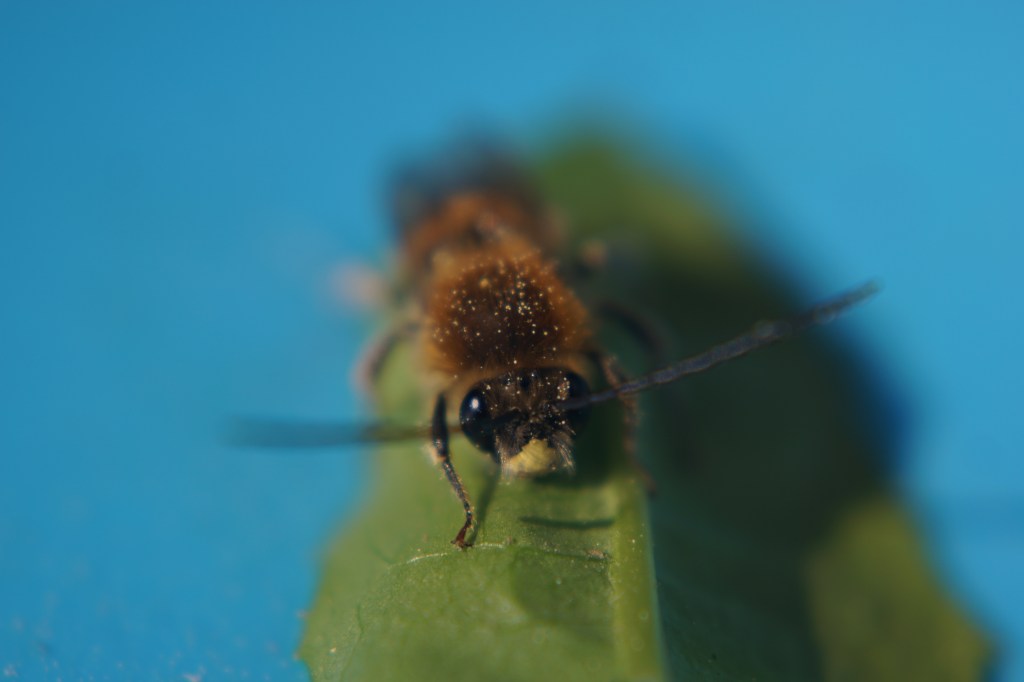
Painted Nomad Bee – Nomada fucata
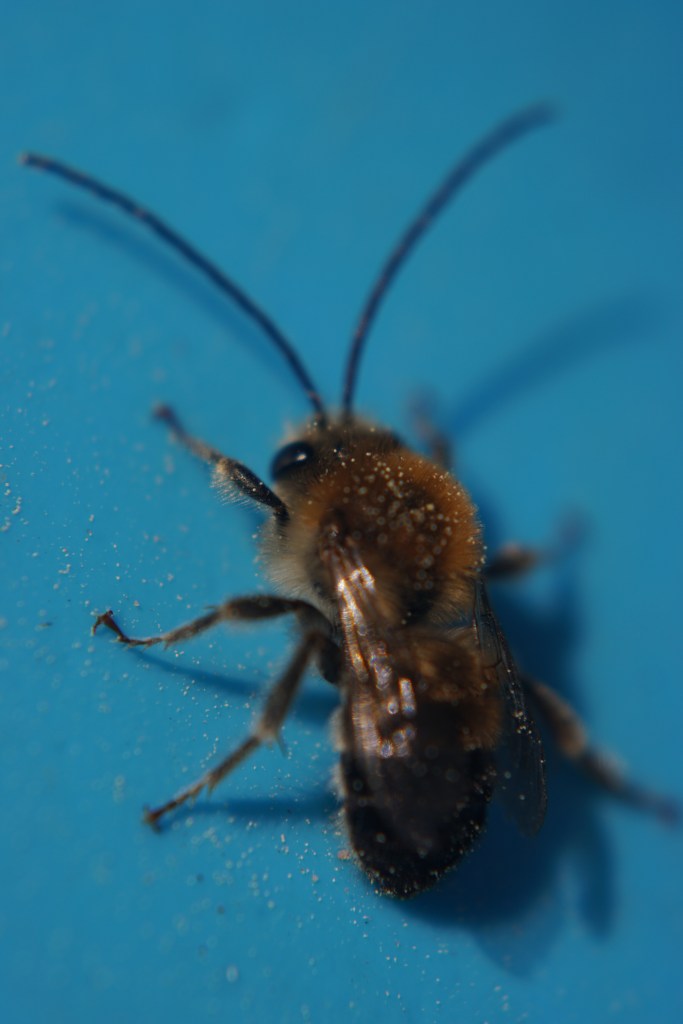
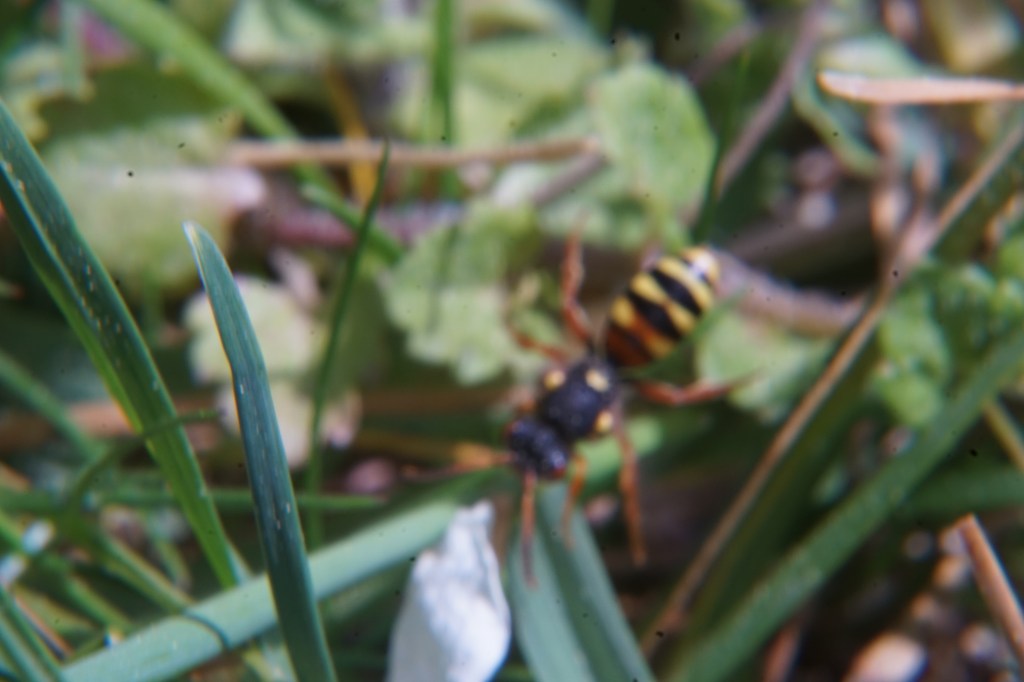
This gal looks like a hoverfly (see below) with the broken yellow bands on the abdomen, and also like a wasp with the antennae. The red band on tergite 1 and the intersection fo red in the middle of tergite 2 make this look like a female.
Bumblebees
Most of the early appearing bumblebees may be the large furry Queens that overwinter, then emerge to forage in order to establish a nest and raise a cast of workers. The nests typically include old rodent nests, which may explain why I saw a Buff-tailed bumblebee flying into a gated drain area just below our doorstep, where I had previously seen a mouse escape to a couple weeks prior. I was trying to get rid of the mice taking advantage of our compost bin, but I suppose a managed population may be acceptable if they provide such a beneficial service.
Living in cool temperate zones, they are also able to be effective pollinators in early Spring when some days are still cool, cloudy, or even a bit wet. I had a few visitors starting in March based on the large collection of dandelion and dead nettle flowers in my yard. The length of the tongue determines which types of flowers each species can collect from.
Carder Bumblebee
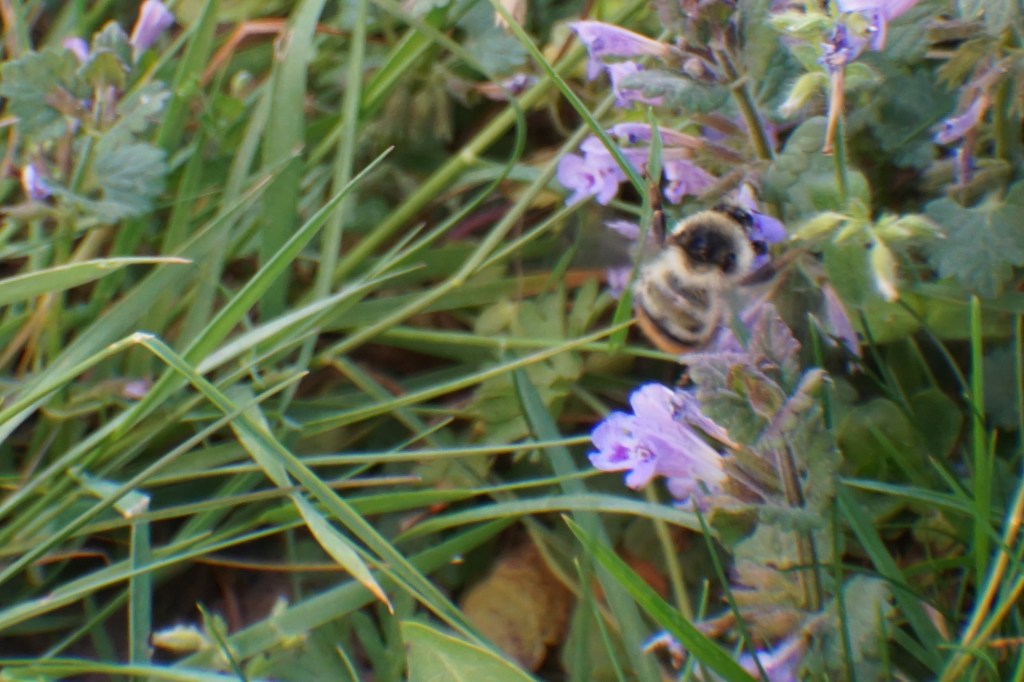
The bumblebee below is likely a Queen Carder Bee, although I can’t pinpoint it down without a clearer photo. The brazen back was the first clue, with lighter strips of fluffy yellow towards the tail a second; although there are distinct differences between the Moss Carder bee and the Common Carder Bee as the two likely candidates.


Buffed Tailed Bumblebee

Mystery Bumblebee
Wasps
A Wasp nest showing a few cells where the
Germanica Wasp
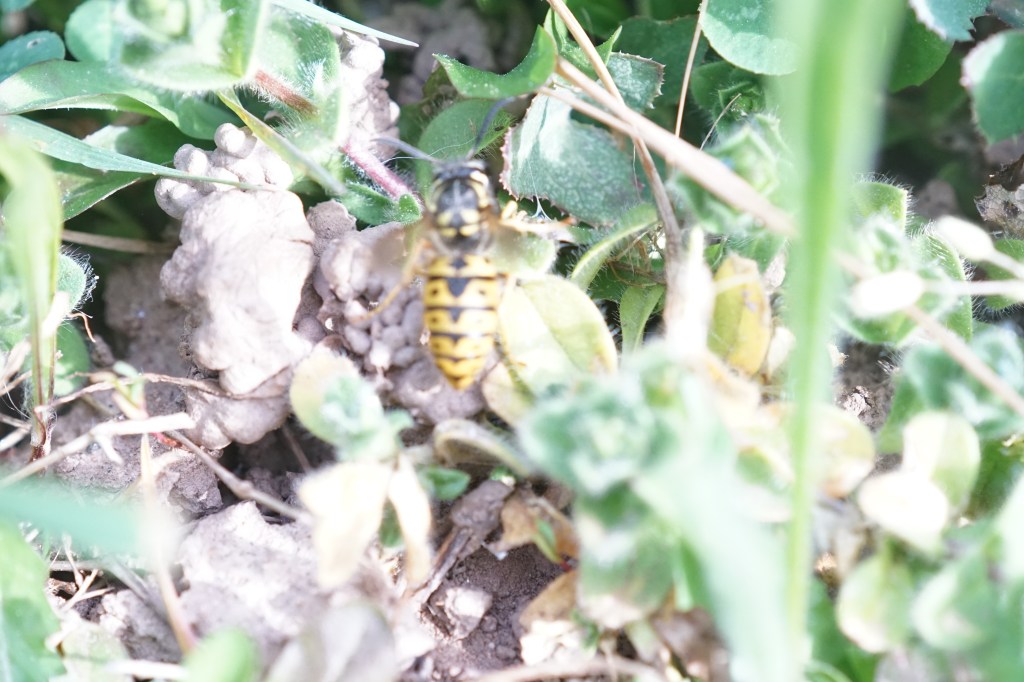
The German wasp is larger than a common one and can be distinguished by the clear yellow streak behind the eye. I believe that I found one of the underground nests, with the larger opening providing a landing pad, and showing a few cells broken open. [12] Supposedly, in early Spring a German wasp is usually within 500 meters of its nest. [13]


French Paper Wasp
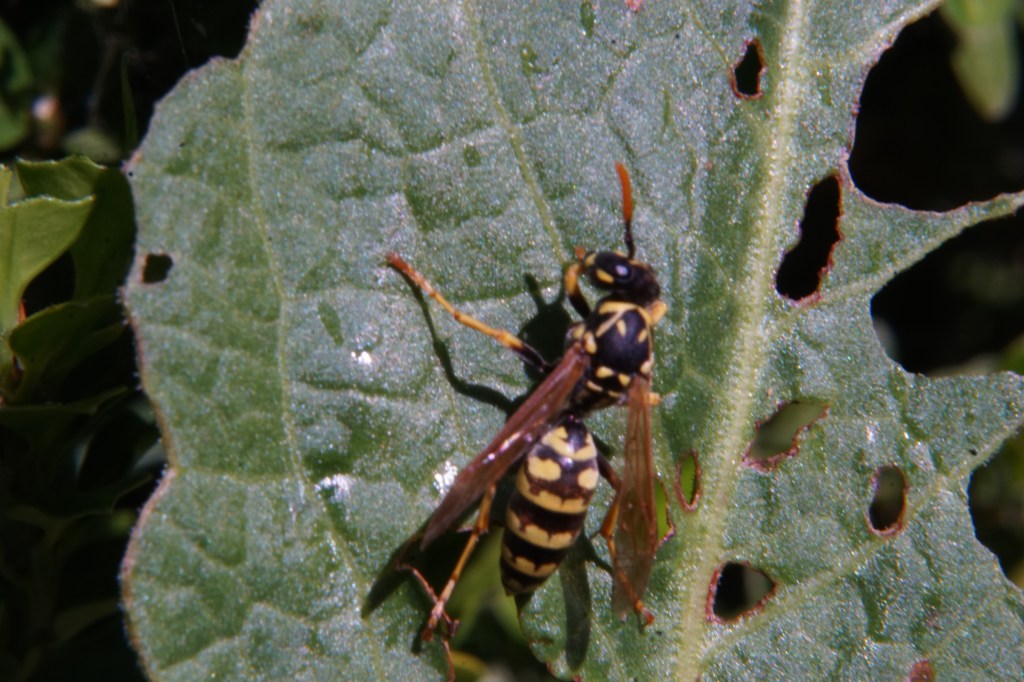
At first, I thought this was another hoverfly based on the similarity in patterns to the Syrphus above; however, after a while I noticed the red antennas should have been the first indicator that this was actually a wasp. It can also be confused with the European Paper Wasp which has broader bands of yellow although fitted with the same undulating pattern. [5]

European Paper Wasp
Polistes dominula
Parasitic Wasps
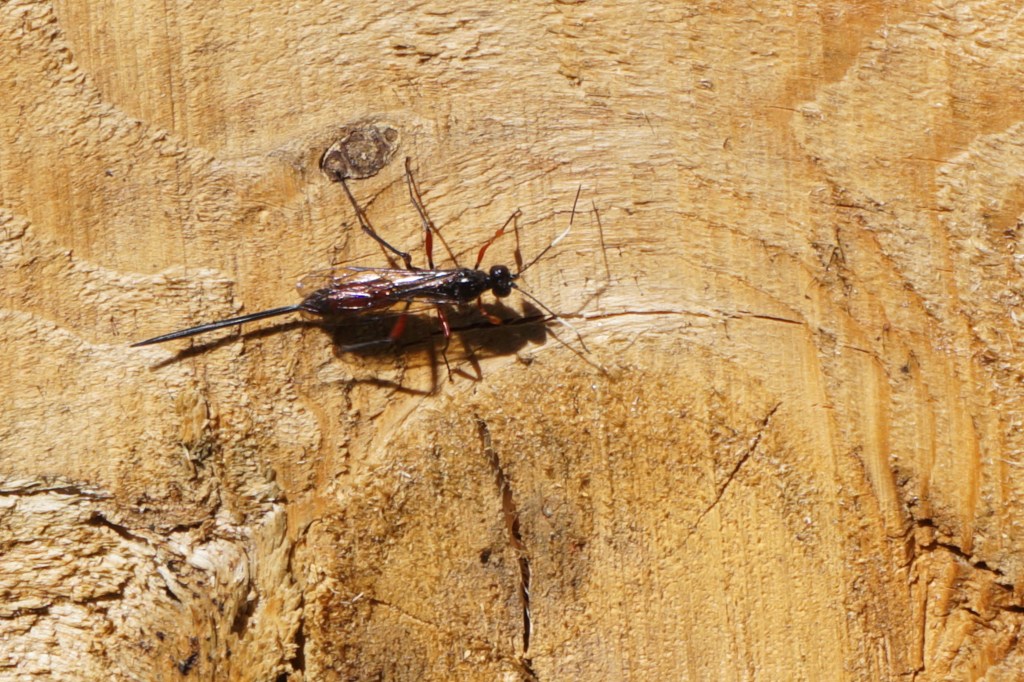
Xoridinae Wasp
Hoverflies
Hoverflies are a member of the family Syrphidae, a family within the order Diptera (true flies) [9].
Dark-Backed Epistrophe
The Epistrophe nitidicollis on a Sweet Cherry flower in mid-April. Supposedly the larvae feed on aphids so I’m hoping to encourage them to remain in my garden this Spring.
Of our locals plants and flowers, they gravitate to Umbellifers/Apiaceae that have spreading umbrellas, to include: Caltha (Yellow Marsh Marigold), Euphorbia (Spurges), Prunus (plums & cherries), Ranunculus (buttercupts), Rubus (Raspberries/blackberries), and Taraxacum (Dandelions).[7, 8, 11]

Migrant Hoverfly
Migrant Hoverfly – Eupeodes corollae [6]

Helophilus
H. trivattatus “Große Sumpfschwebfliege” [14]
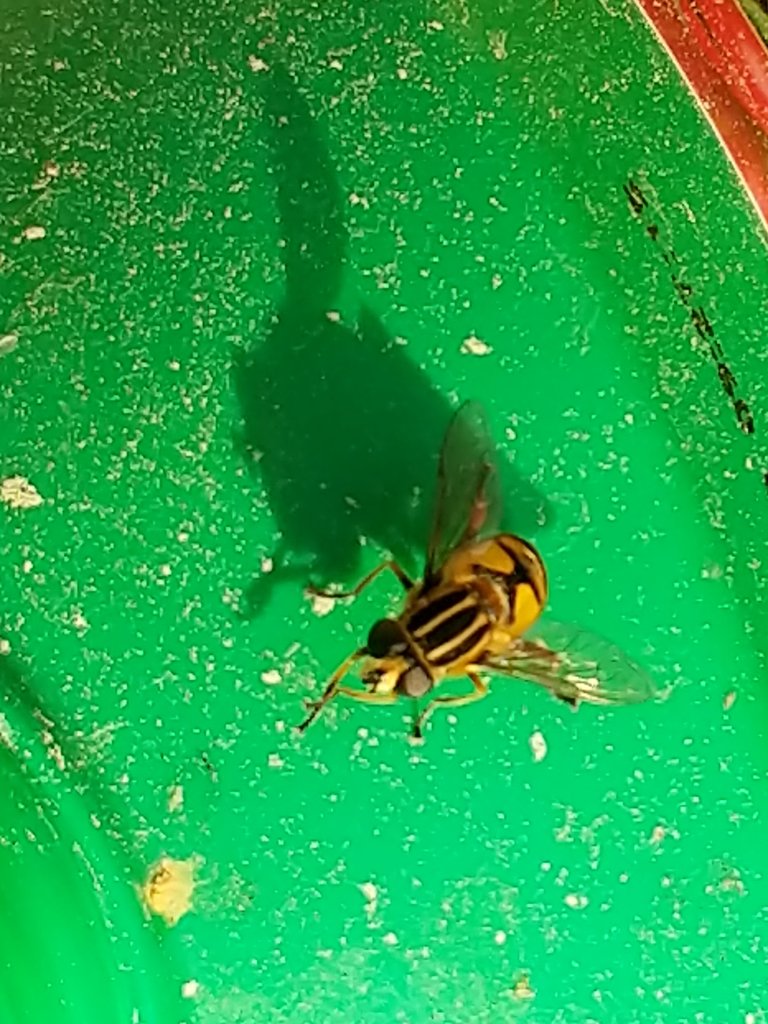
“Dangling Marsh-Lover” – H. pendulus
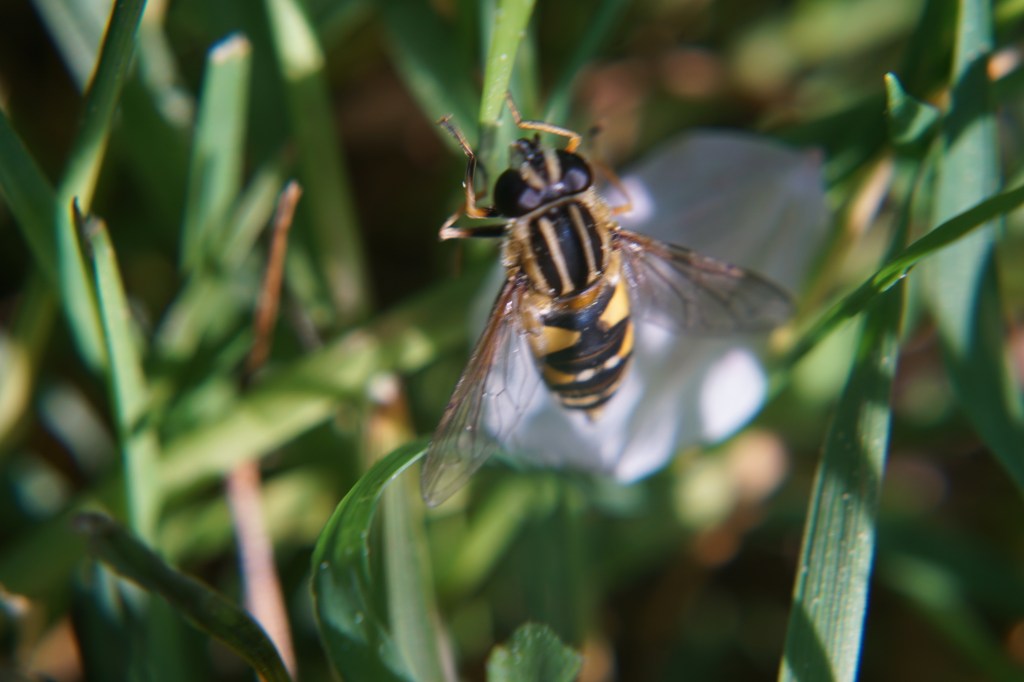
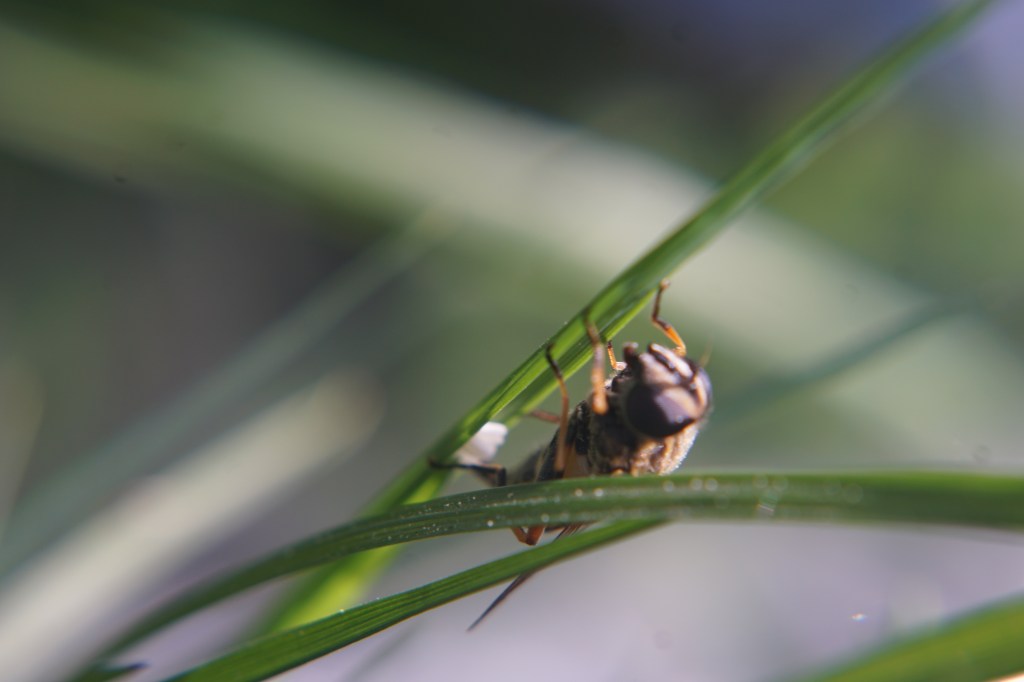
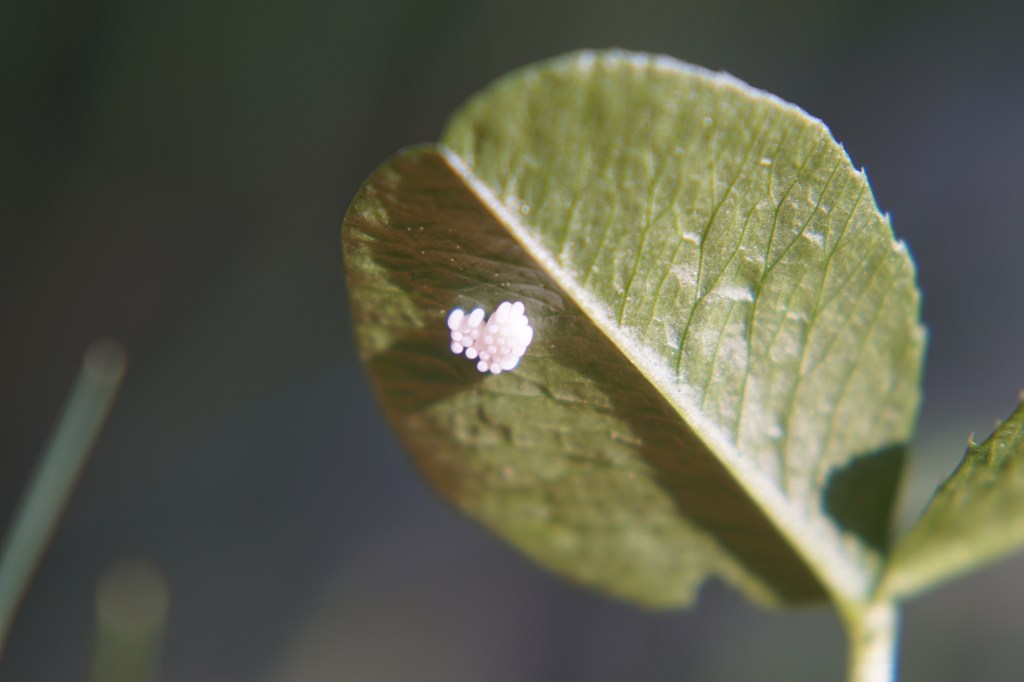
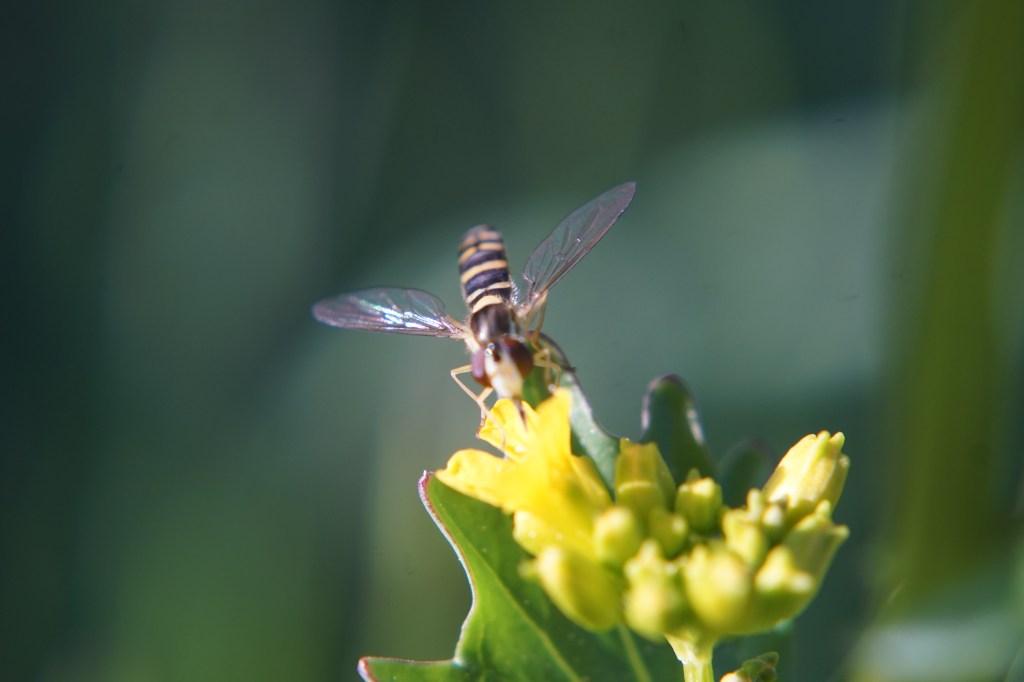
The Long Hoverfly – Sphaerophoria scripta
Sources:
[1] Falk, Steven. “Field Guide to Bees of Great Britain and Ireland.” Bloomsbury, (2015).
[2] Ashy Mining Bee, Wikipedia
[3] Bee’s external anatomy, https://abejas.org/en/bees-external-anatomy/
[4] https://ec.europa.eu/environment/nature/conservation/species/redlist/downloads/European_bees.pdf
[5] https://en.wikipedia.org/wiki/Polistes_gallicus
[6] https://www.naturespot.org.uk/species/migrant-hoverfly
[7] https://www.naturespot.org.uk/species/epistrophe-nitidicollis
[8] https://www.flickr.com/photos/63075200@N07/albums/72157629689691761/
[9] https://www.naturespot.org.uk/taxonomy/term/19415
[10] https://de.wikipedia.org/wiki/Geh%C3%B6rnte_Mauerbiene
[11] https://en.wikipedia.org/wiki/Epistrophe_nitidicollis
[13] https://www.theguardian.com/environment/2012/jul/01/specieswatch-german-wasp-insects

 Waunder