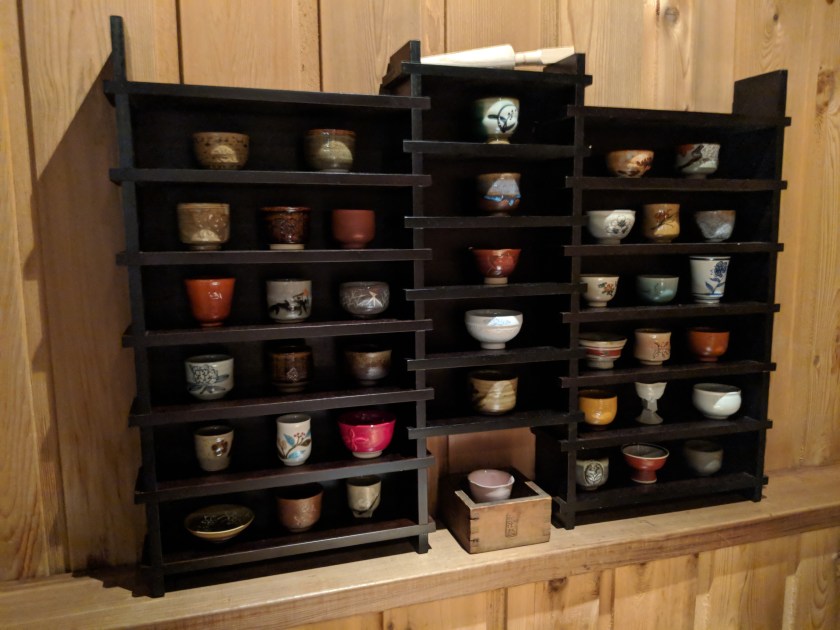
Falling in love with Japanese ceramics can be as easy as walking in to a community store in Japan and marveling at all the different textures, sizes, and colors available. Each piece is made so beautifully and with such care that the act of collecting ceramics deserves a place in the heart of sensing community in Japan.
For me, it was the warmth and love I felt in our favorite Japanese restaurant which got me into a collection addition.
Most ceramics are designed for tea, soup, or sake; although many can be meaty, thick-layered plates for meals.
With regard to ceramic sake cups, the first lesson you learn is that you must fill the empty glass(es) of your friends at the table. (Ah hum — the first lesson you may learn is that you probably won’t get the rice wine that want you want if you ask for “sake,” but I’ll talk about that in a later post.
Filling each other’s glasses means that you have to remain attentive. Unencumbered by thoughts of trivial posts or likes.
Fortunately, putting down the device is easy when there is so much good food to eat.
Living in in Zushi, Kanagawa, Japan, we fell head-over-heels in love with the restaurant Blue Moon. It has a simple, relaxed vibe that manages to bear the yoke of high-minded sloganism: “think globally, act locally.” But this positively meant that their food was always fresh and was presented with a global fusion spin the traditional dishes.
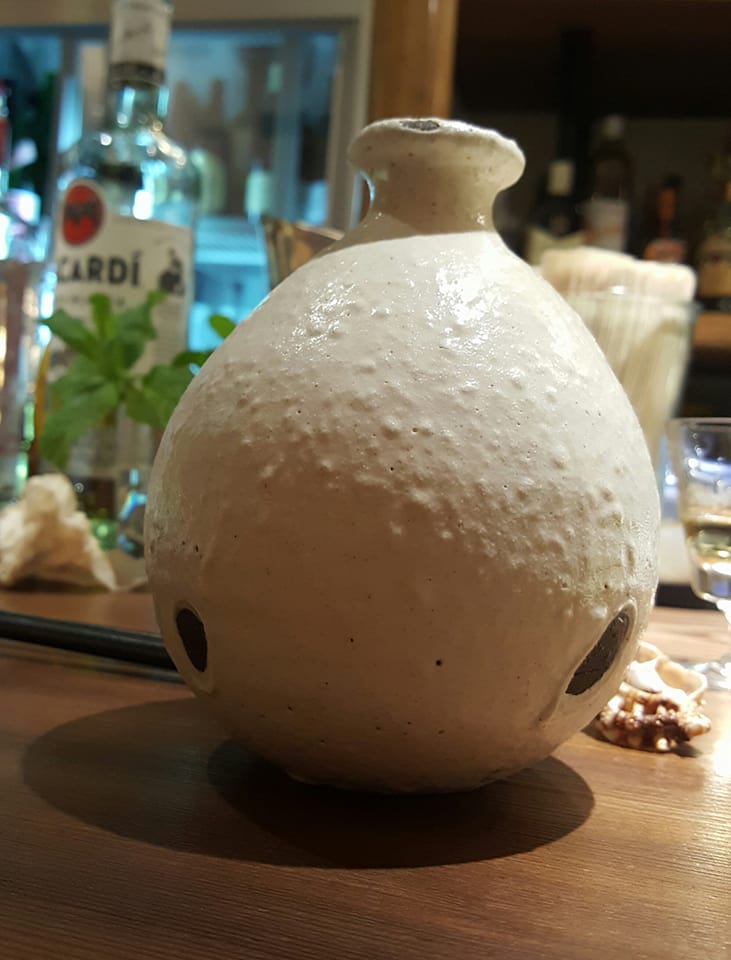
When we drank sake, we were handed a unique Ochoko and Tokkuri set, the small cup and matching flask for pouring sake from. Holding the warm Tokkuri in my hand, it felt like holding the warm and soft body of a dove from heaven, filling me with a glow of delight and wonder. Two rough circles on the body remained un-glazed, making the first place to put a thumb and a finger as though it were the two gentle legs of a bird perched in your hand.
It’s very common in Japan for neighbors and friends to give a gift and to have the gift returned. We had been told that this process can go on and on and on, so we had no idea what we might be getting into when the restaurant chef said that I could keep one of the ochokos that I admired.
We went out the next day to find an ochoko to give them in return. And over the next couple years, we received and gave several ochokos that we found and enjoyed. When we came in to the restaurant, they always served us with one of the ochokos that we had brought. Of course, they also knew to pair it with my favorite ‘dove’ tokkuri above.
Many times, I asked them if I could have the ‘dove.’ It was made by a local artist and was treasured by them, so they always turned me down, even when I said that we would purchase it from them.
When it came time for us to leave Japan, we were so sad to leave the chefs and waiters who had become our friends. We reserved the entire place and filled it with our friends, drank shots of the venomous Habushu with the chefs, and cried that we would miss them so much.
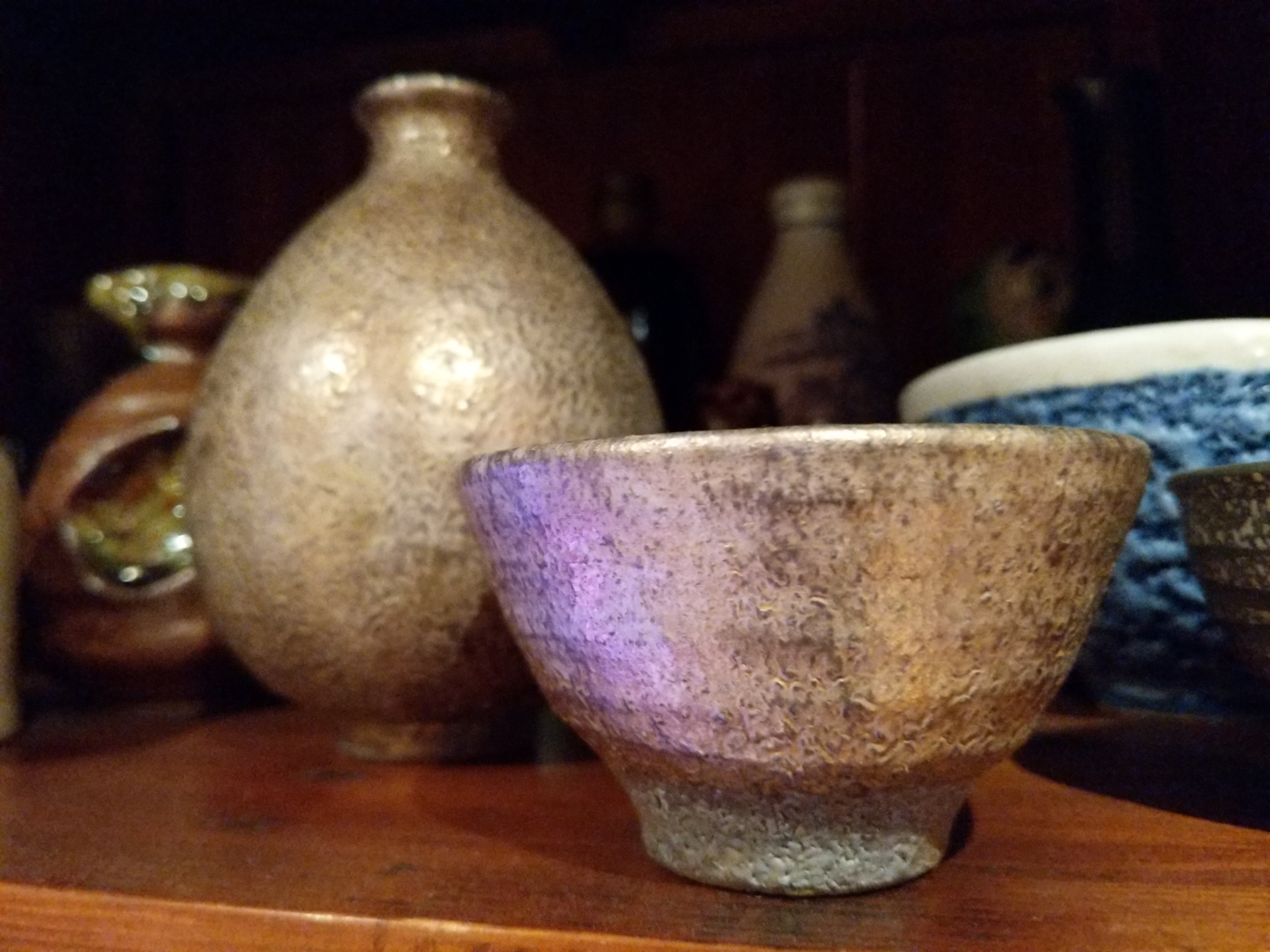
It was then that they presented me with a final gift: They had commissioned the local artist who had made the ‘dove’ to make me my own set! What a treasure their love and gift of hospitality had been! To this day, this set remains the most prized ceramics that I own, even as I travel the world and collect this fabulous form of art.
Since then, I’ve applied this mindset to our neighbors in Germany. Germans tend to be reserved until you really get to know them, then they welcome you with open hearts. I got to know them by spending time in the front garden, and soon we were sending over American food to try, extra cake that we had made, and delights that I bring back from my travels. They often return the favor, but more, they become more friendly and welcoming in their home.
 Waunder