Preventing the Common Cold
Shortly before reading an article on the health benefits of raising the humidity of the air, a colleague of mine mentioned how he would turn on the humidifier in his bedroom when one of his kids got sick, which seemed to limit the time they were sick and also prevented others from catching it as well. So I was excited when research at hospitals validated this theory with a bit of science.
The human body is roughy 60% water, so that in dry air, we became a welcoming oasis for a desiccated and dormant “pathogen [to] rehydrate and begin the infectious cycle all over again.” They found that the ““sweet spot” for indoor air is between 40% and 60% relative humidity. “
Using my hand-held hygrometer to measure humidity in the air, I found that a typical room in my home (in January with floor heating sustaining 20C), is between 48-52%. Surprisingly, the Kitchen is the lowest while the upstairs is 50-52% (at 20.5 C). However, I found that opening the door of the dishwasher as soon as the cycle is complete produces enough steam to get it back up to at least 50%.
Without having a humidifier, I also tried boiling water in an open kettle on the kitchen stove. In 40 minutes, the humidity in the kitchen increased by 7%, however, it only lasted a few hours. (One thing to note is to direct the spout away from electrical outlets which may be near the stove!) I guess I’ll be purchasing a humidifier soon!
Another example of maintaining optimal temperature and humidity is when I found a neighbor boiling water in his garage during New Year’s Eve. He had a fire outside the garage, but the pot inside get the environment warm and comfortable for us to celebrate.
While 40-60% may be ideal for humans, what about house plants?
The Science of Houseplants
Plants also require sufficient humidity to maintain photosynthesis.
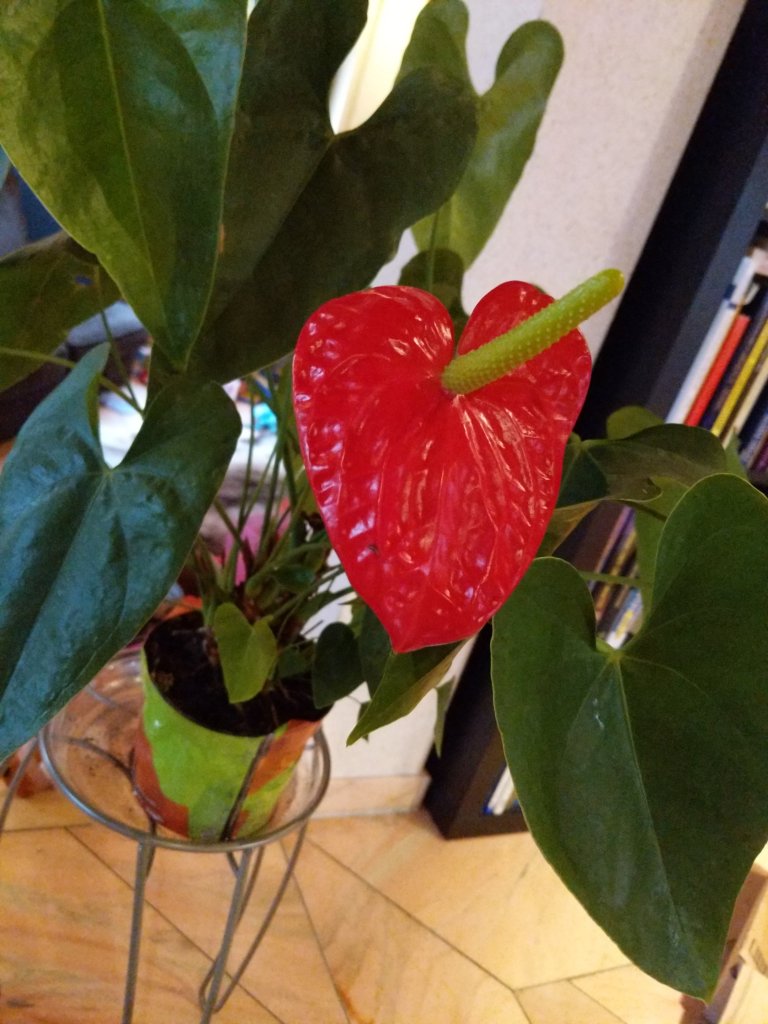
On a recent trip to Tel Aviv, Israel, I noticed that many of the houseplants that I keep in my hone in Germany, such as the rubber plant and anthurium, are flourishing as potted plants throughout the streets. When I looked up the average humidity per year, it is a delightful 71%, which makes sense for being located near the sea. But I will never forget how jealous I felt when I saw a huge and bushy anthurium family growing at the hotel I stayed at, while I continue to struggle with my own at home.
During the process of absorbing CO2 and releasing oxygen, the pores of the plant, called stomata, swell open and close based on exposure to light and water. While open, the plant is also able to stay cool by releasing excess heat through transpiration, however, releasing too much water can cause the stomata to lose water pressure and close, preventing the further intake of CO2 and the release of Oxygen.
The adaptation of stomata varies in each plant according to how many stomata they have, the size of the pore, and how efficiently they open and close based on environmental factors. For example, cacti and succulents only open their stomata at night, storing CO2 to use during the following day while preventing water loss in the heat.
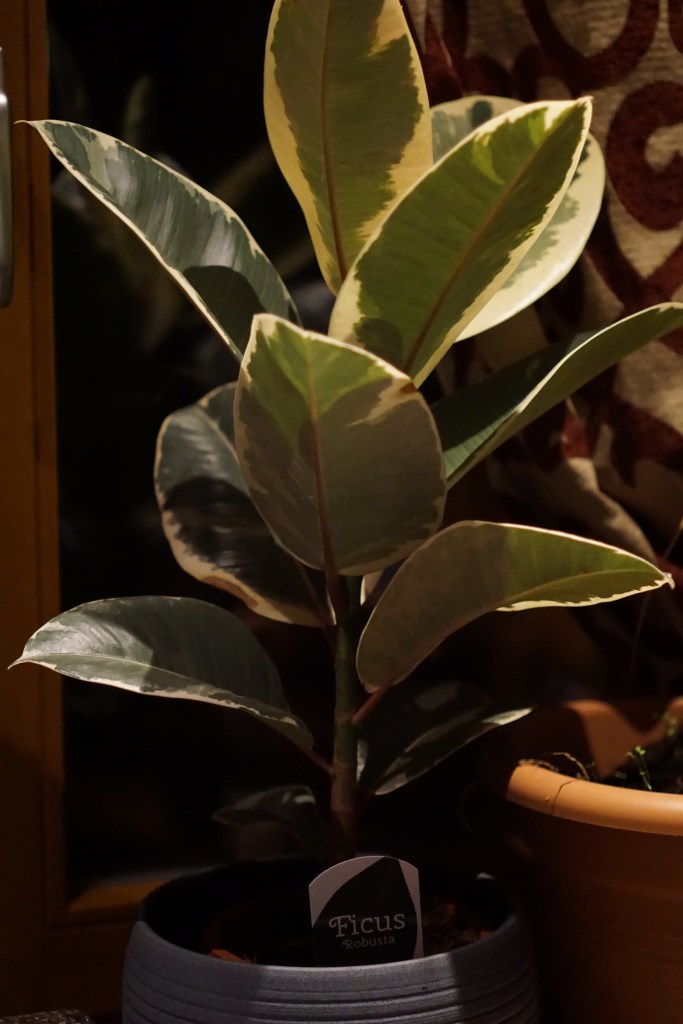
The bottom line is to think about how humid your home is when you purchase your next houseplant. If necessary, most websites recommend increasing humidity using a mister, putting pebbles in water under the base, putting them in a a terrarium, or buying a humidifier.
With my anthurium sitting at 50% humidity and 20C under indirect light, I doubt that it is very happy. (I also found in writing this that they need a 6 week rest period in winter at 15C to produce flowers in Spring — so much for being easy to care for.)
Fine-tuning the Growing Cycle
In the past several years, purchases of houseplants have skyrocketed, which results in driving the prices up for the more desirable plants. While most commercial plants are selected based on the skill needed to keep it alive, a more adventurous and cheaper path is to grow your own from seed.
However, growing plants from seed requires different degrees of humidity based on the phase in the growing cycle.
Germination. To germinate seeds, they need between 50-60% humidity. The temperature can vary, but mostly they need at least 20C.
Right now, I’m growing peppers, which need a higher humidity for 50-70%. needing up to 25-28C which requires a heat man and a plastic cover to trap moisture. I’m growing a variety of Capsicum annums (and one chinese*), with German or Italian name in parenthesis.
- Hungarian Red Round pepper (Tomatenpaprike, Apfelpaprika)
- Hungarian Hot Wax Banana pepper
- Hungarian Black chili pepper
- Jalepeno pepper (Jalepeno chili)
- Sweet Italian Pepper (Parika Peperone Friggitello F1 Hybrid)
- Apache (Zwerg chili)
- *Red Habanero (Habanero Rot)
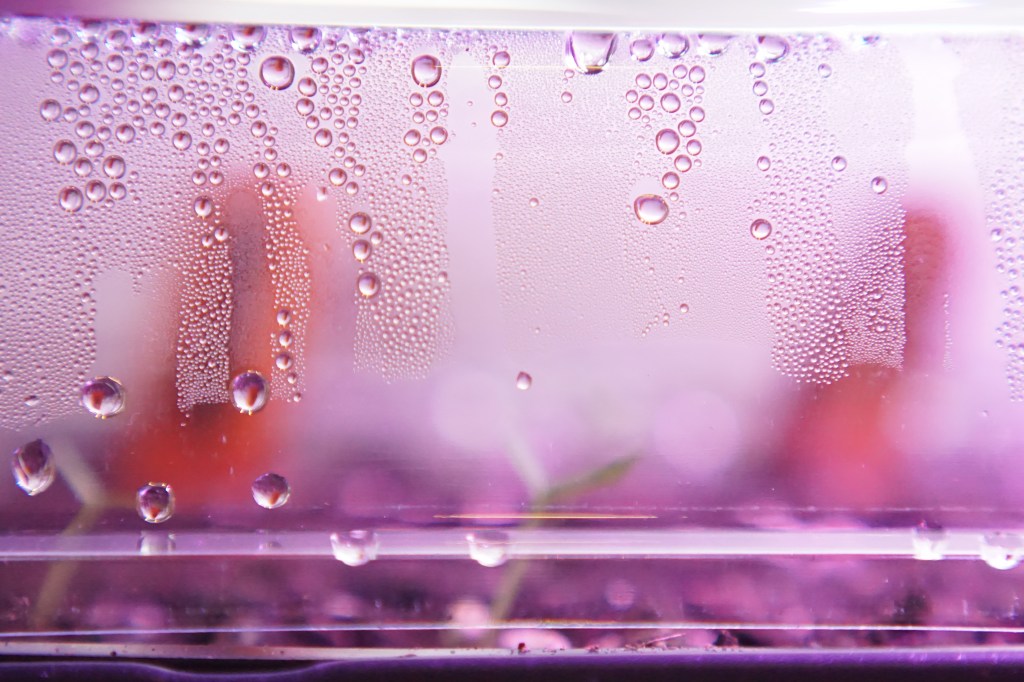
However, sitting in covered bins on a heat mat, the air is 23C with 90% humidity, with heavy droplets of water accumulating on the top of the cover. This has caused unwanted mold to form. After measuring this, I decided to open up the lids at night and put them back on during the day when evaporation is more likely.
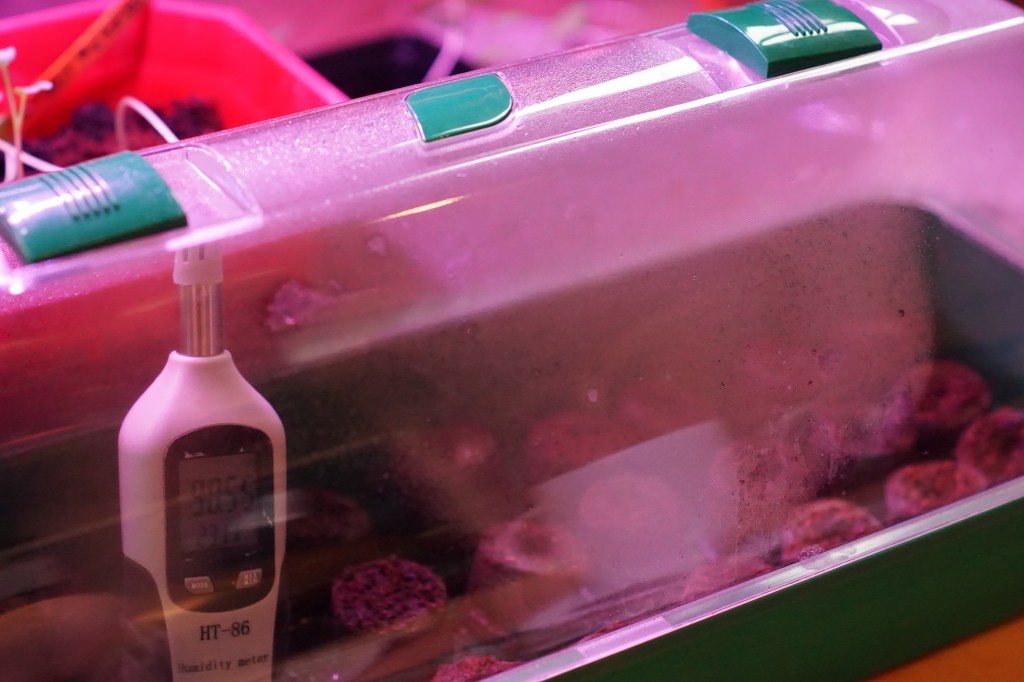
I’ve also used a larger dome for starting onion seeds. It comes with two sliding slots on the top to regulate the humidity. With the slots open at 3 mm, there is fog on the plastic maintaining 88.5% humidity. Unfortunately, the large Stuttgart onions failed to germinate, but at least the smaller white onions were good.
Growing. During the fast growing vegetative state, plants need 50-70% humidity, but reduced to 50-60% when they mature to prevent fungal infections.
During the last stages of flowering, it may be helpful to reduce the humidity to 40% using a fan to provide a gentle wind.
Looking for Recommendations
- If you have a favorite humidifier, please post it with a link below.
- If you have any additional tips or sources for understanding the complexity of humidity, please commend below.
- If you have a favorite houseplant and have more information on the necessary humidity levels, please include the botanical name.
 Waunder