Located in Hermersberg, Germany, the first week of October, 2019.
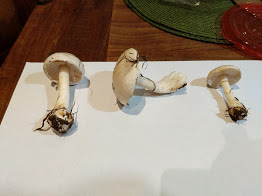
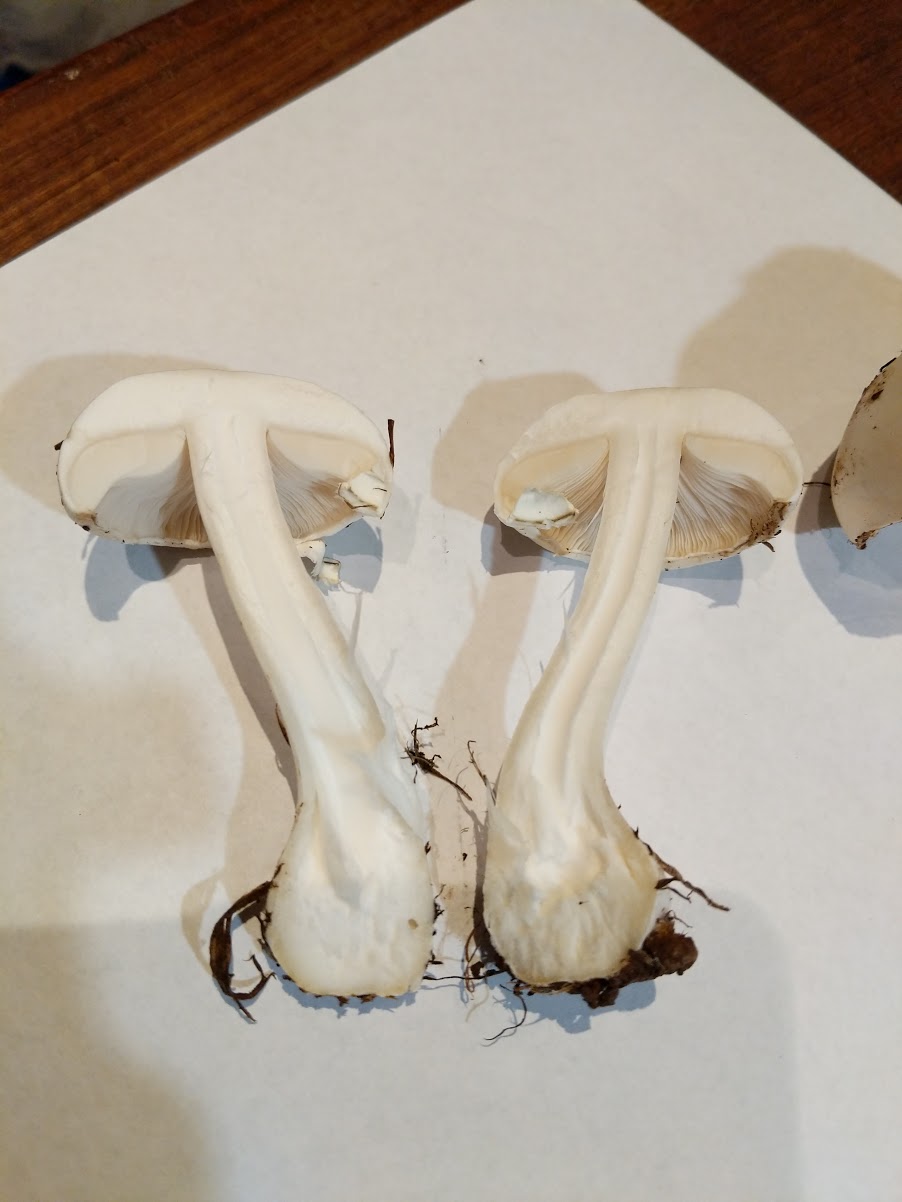
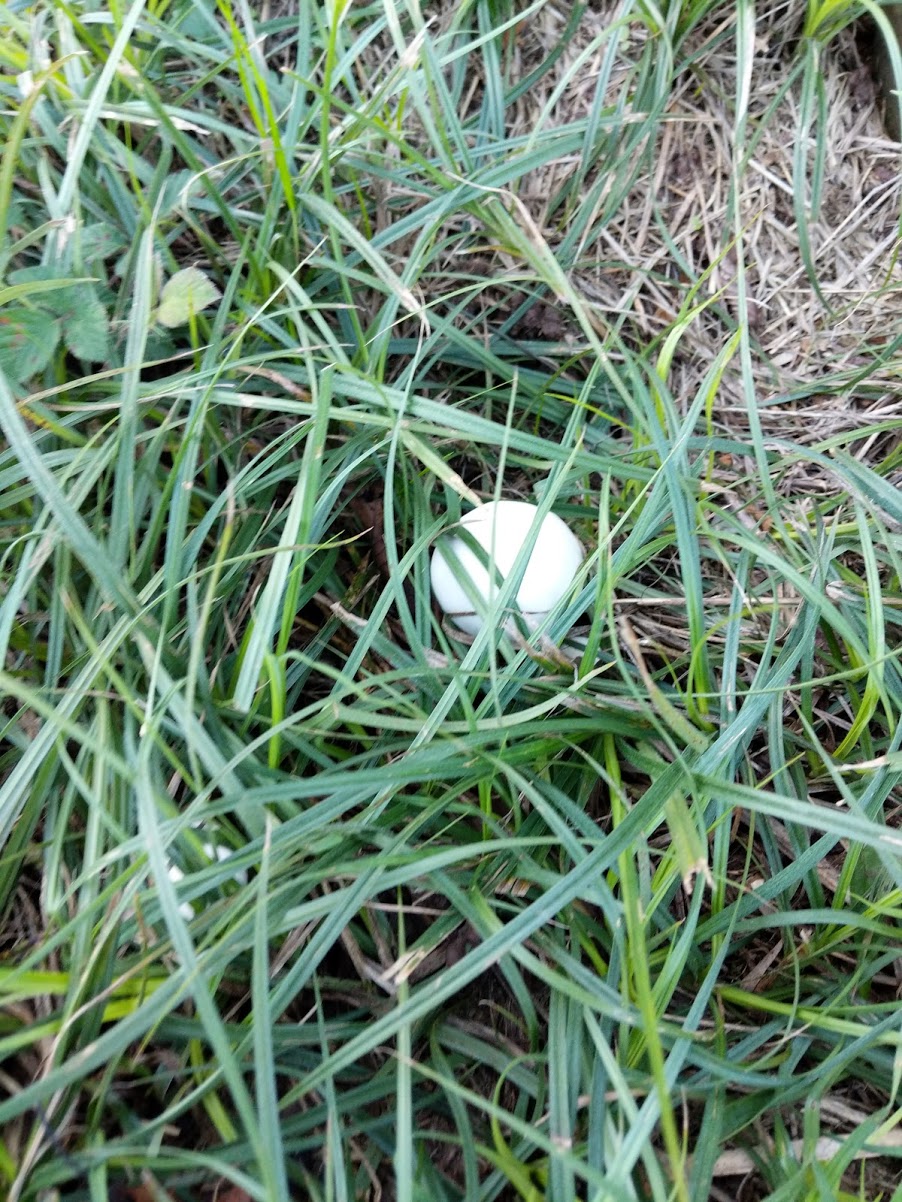
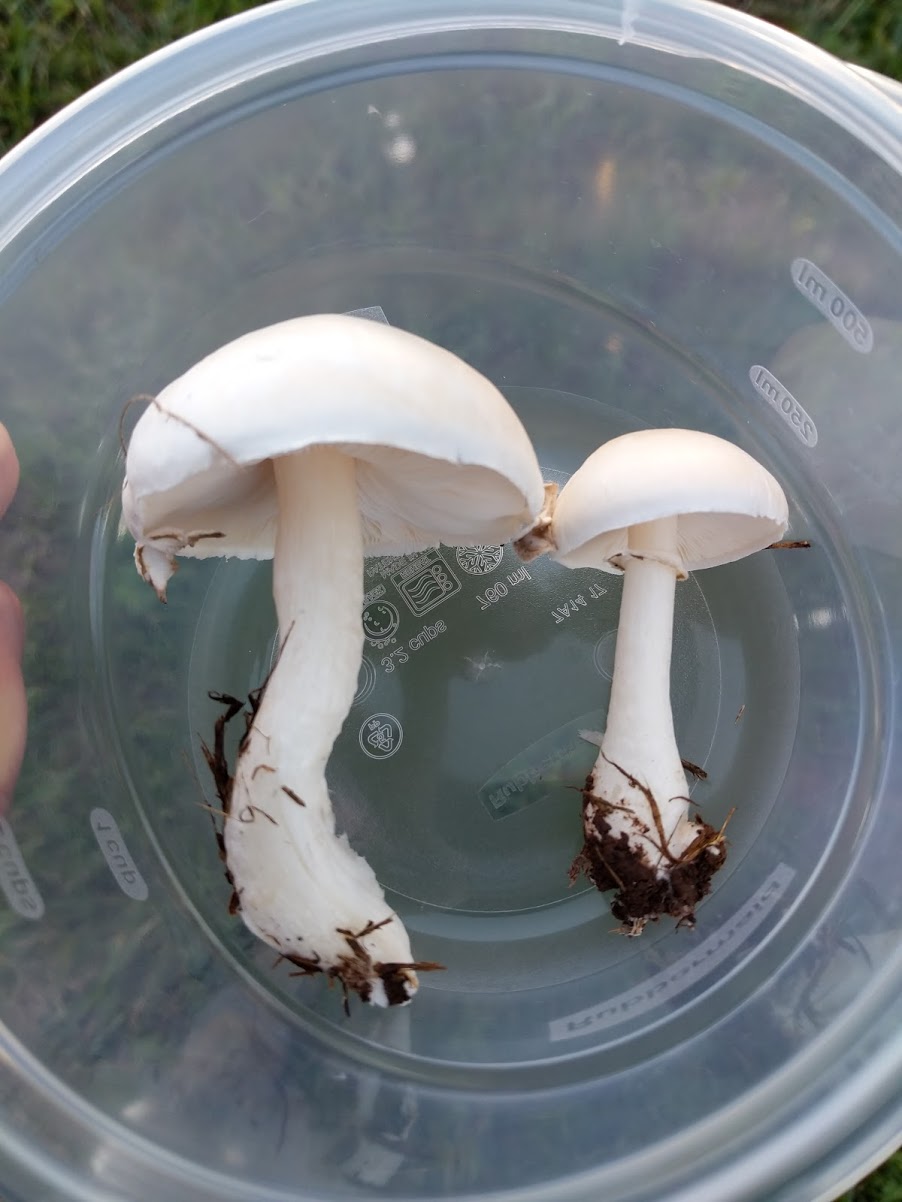
1. “White Dapperling” – Leucoagaricus Leucothites
I originally mistook this for an highly poisonous Amanita aka “Deathcap” because of the white caps, a ring around the younger mushroom, and white spore print. However, the caps have a much more rounded umbrella, the base is shaped like a club, it bruises brown, and the cross section of the gills show that they are not attached to the stem. As shown in the grassy photo where I found them, Leucoagaricus Leucothites commonly grow well on lawns.
More Info:
https://www.first-nature.com/fungi/leucoagaricus-leucothites.php
https://www.mushroomexpert.com/leucoagaricus_leucothites.html
2. “Yellow Staining” – Agaricus section Xanthodermus
German: Tinten-Egerling
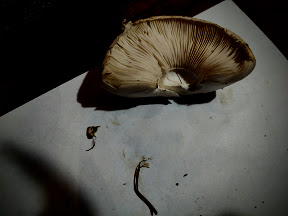
Stains yellow, although this one already looks pretty beat up. According to the FB Group “Poisons Help Emergency Identification for mushrooms & plants,” someone’s dog ate this and it only caused GI upset.
More info: https://www.mushroomexpert.com/agaricus_xanthodermus.html
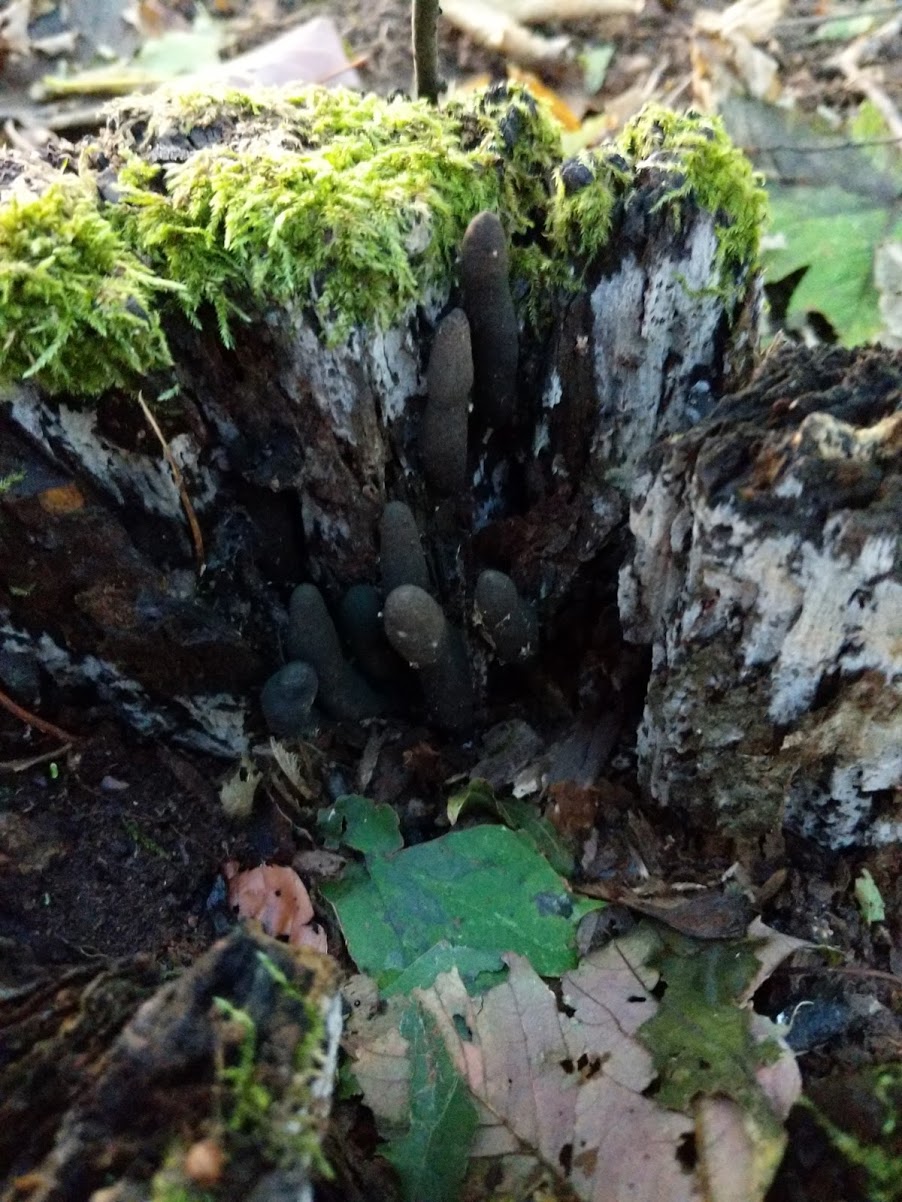
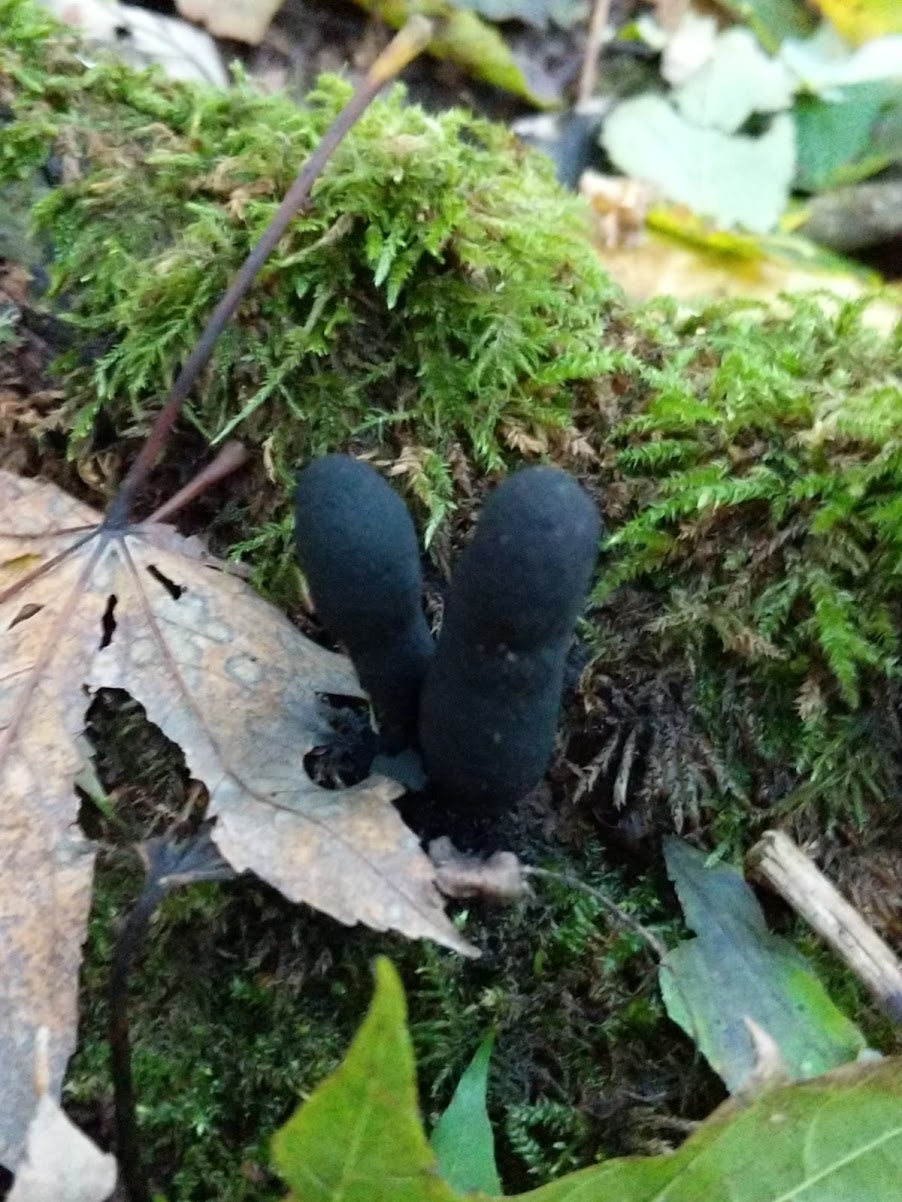
3. “Dead Man’s Fingers” – Xylaria Longpipes
German: Langstielige Ahorn-Holzkeule
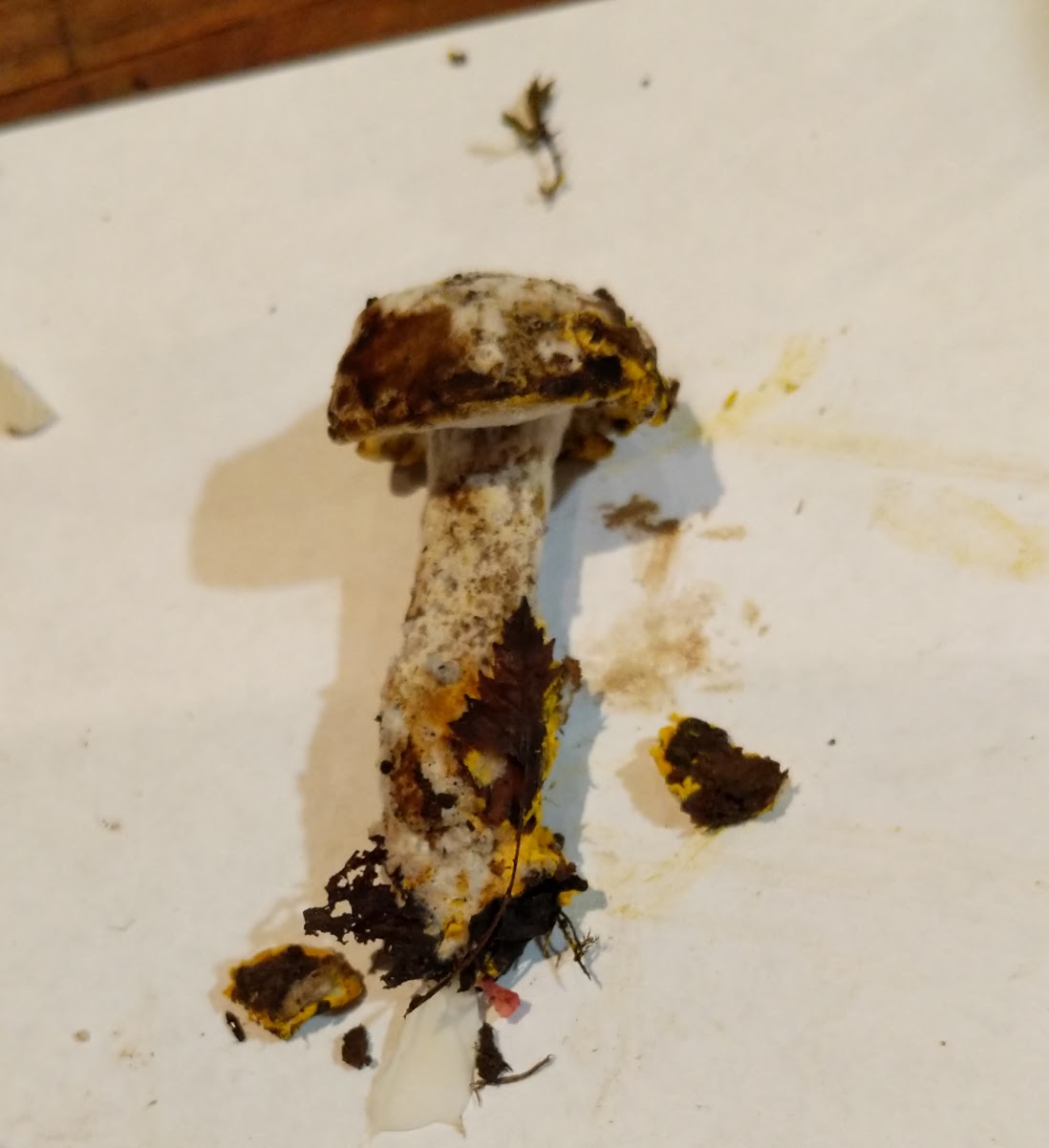
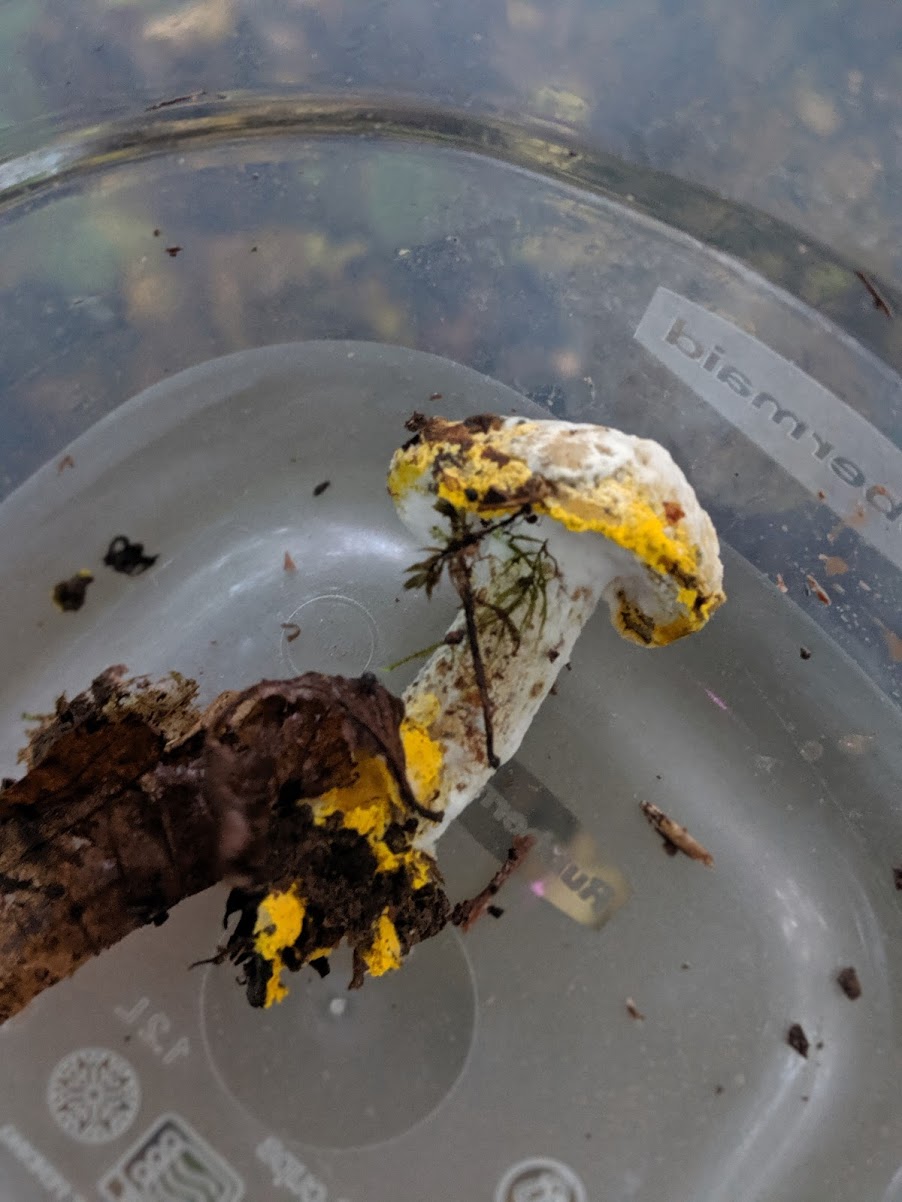
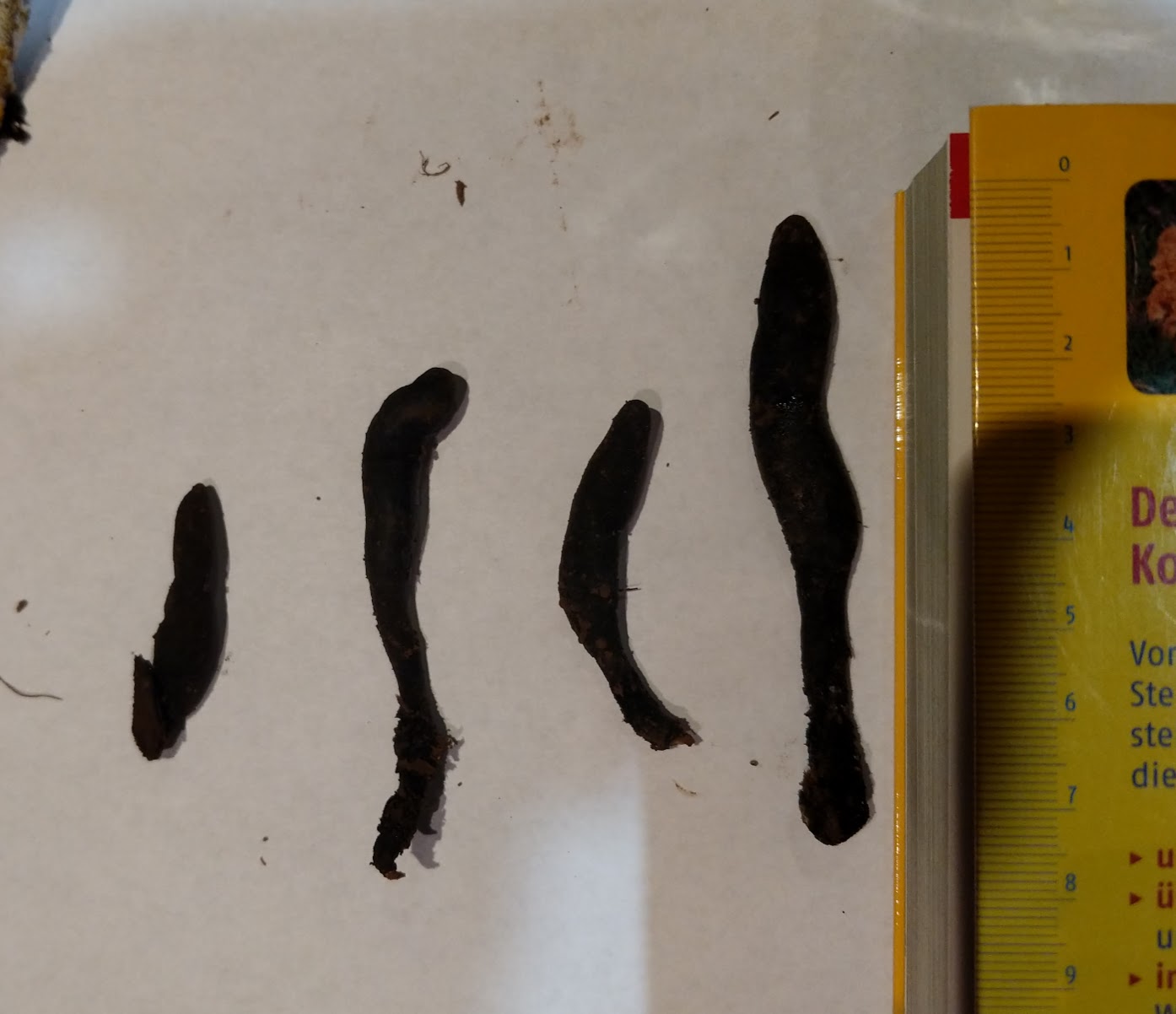
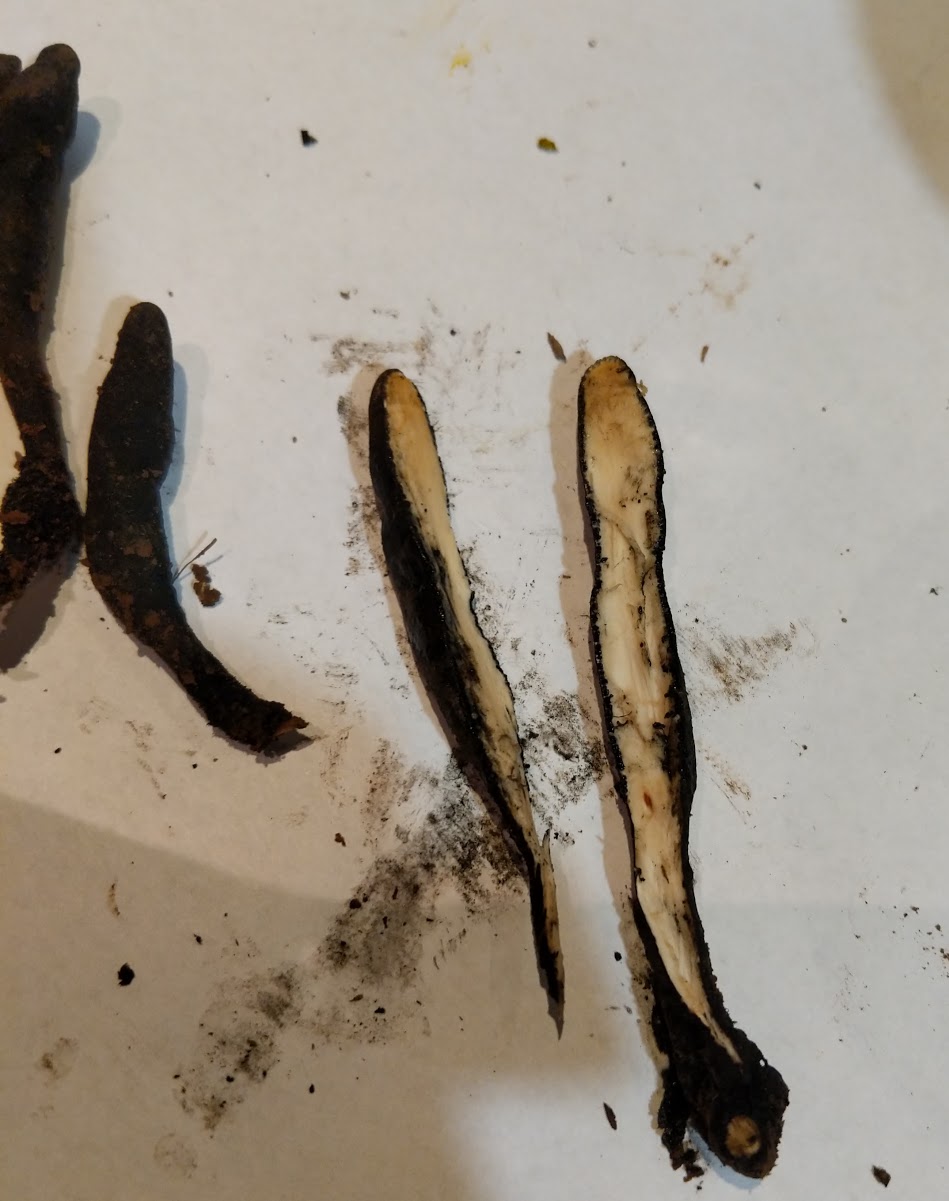
Yes, they look like a dead man’s fingers reaching out from the wood they grow from. In German, the name is less gruesome: “Langstielige Ahorn-Holzkeule” = Long-stemmed Maple Wood Club, which focuses on the fact that they mostly grows on Maple trees (but sometimes grow on beech, oak, or other deciduous trees). Guide book says that they grow up to 8 cm high and 1 cm wide, with slender club-shaped heads, and it seems to match the ones that I gathered here.
More info: https://www.mushroomexpert.com/xylaria_longipes.html
4. “Devil’s Fingers” – Clathrus Archeri
German: Tintenfischpilz
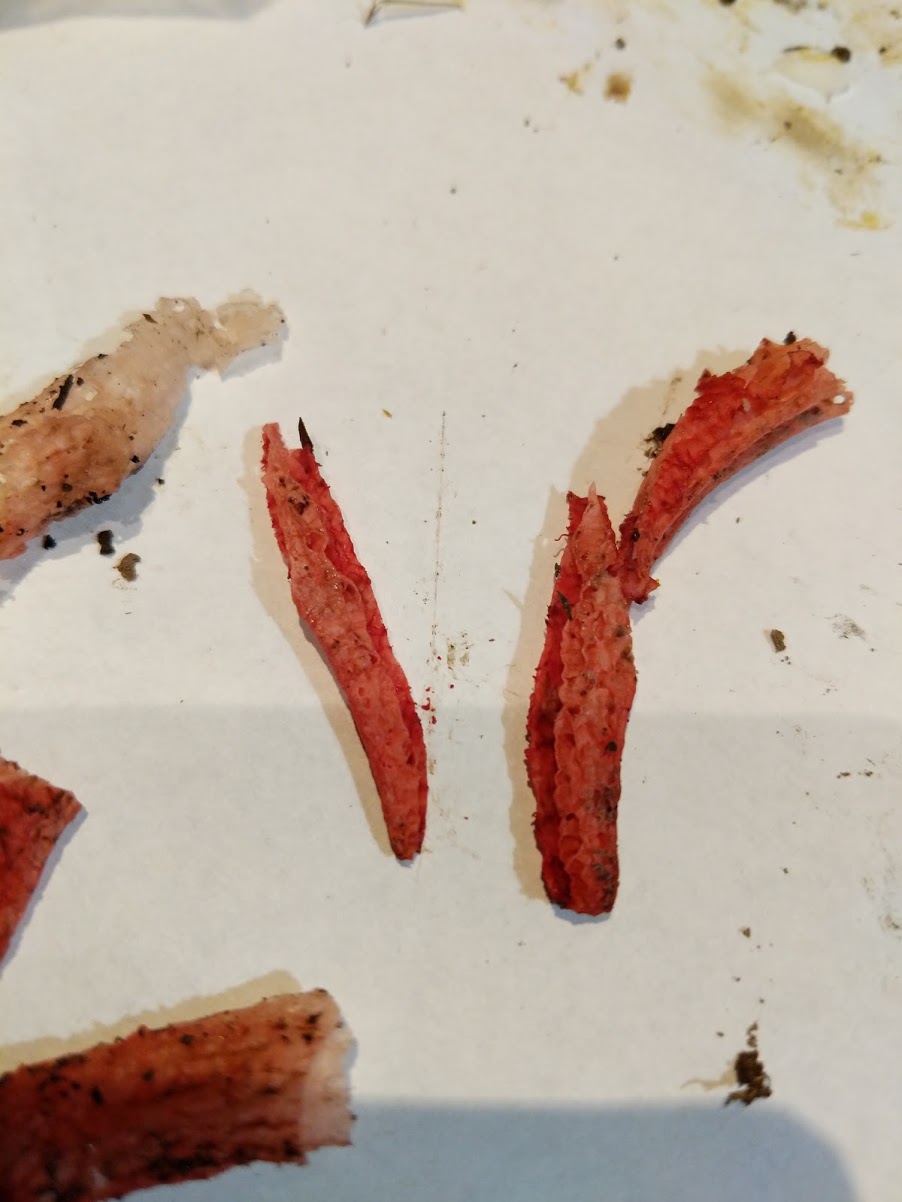
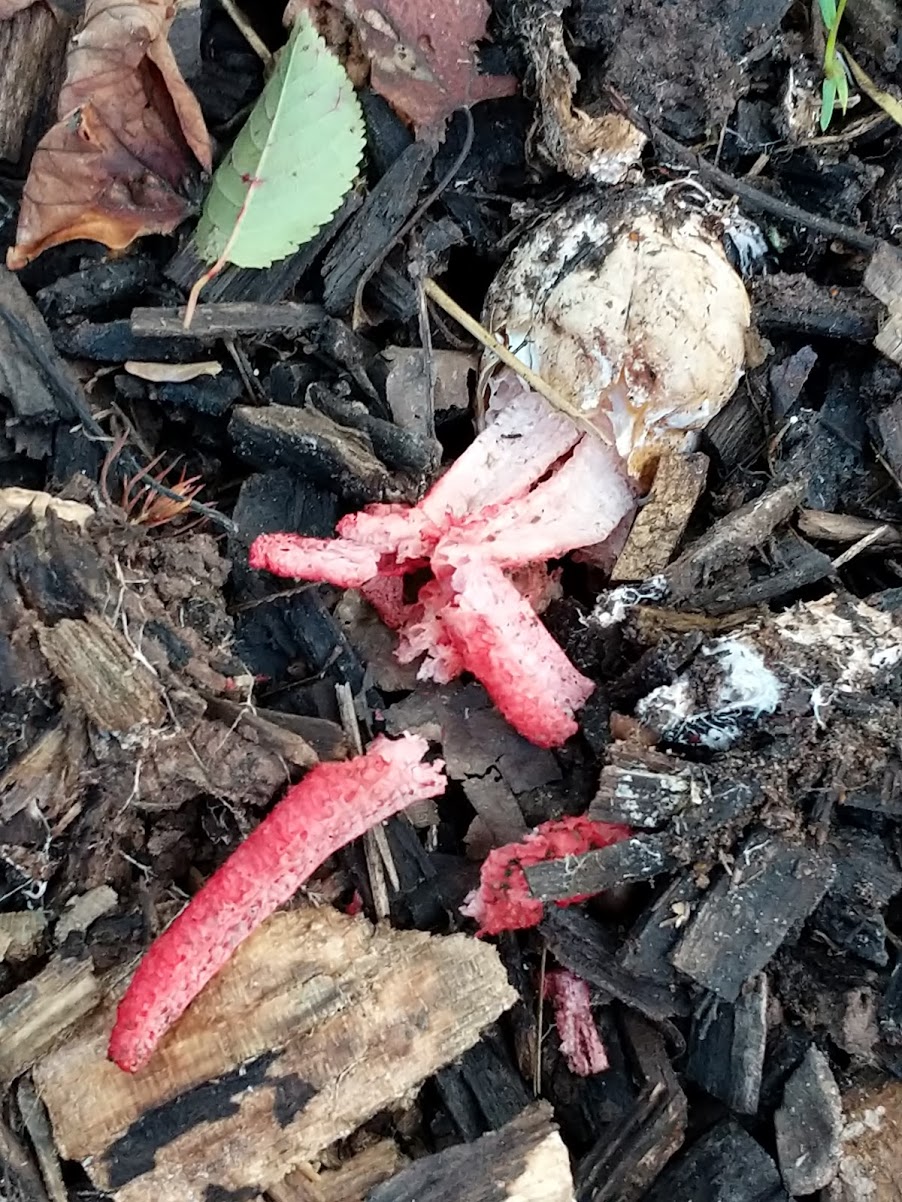
This is supposedly a rare find in Europe, and I was somewhat alarmed to see something bright red on the side of the trail… They look much more glamorous when they’re still in tact, so the one I found pictured below looked like the aftermath of a lobster feast with the leftover limbs pulled apart. You can see the star-like fingers in the mother sack before they were pulled out, maybe by an animal since they are possibly edible? The English common name sounds much scarier that the translation of the German name, meaning squid mushroom, which does resemble the picture below with the tentacles pushing out from the body sack
Pictures of an intact specimen here: https://www.first-nature.com/fungi/clathrus-archeri.php
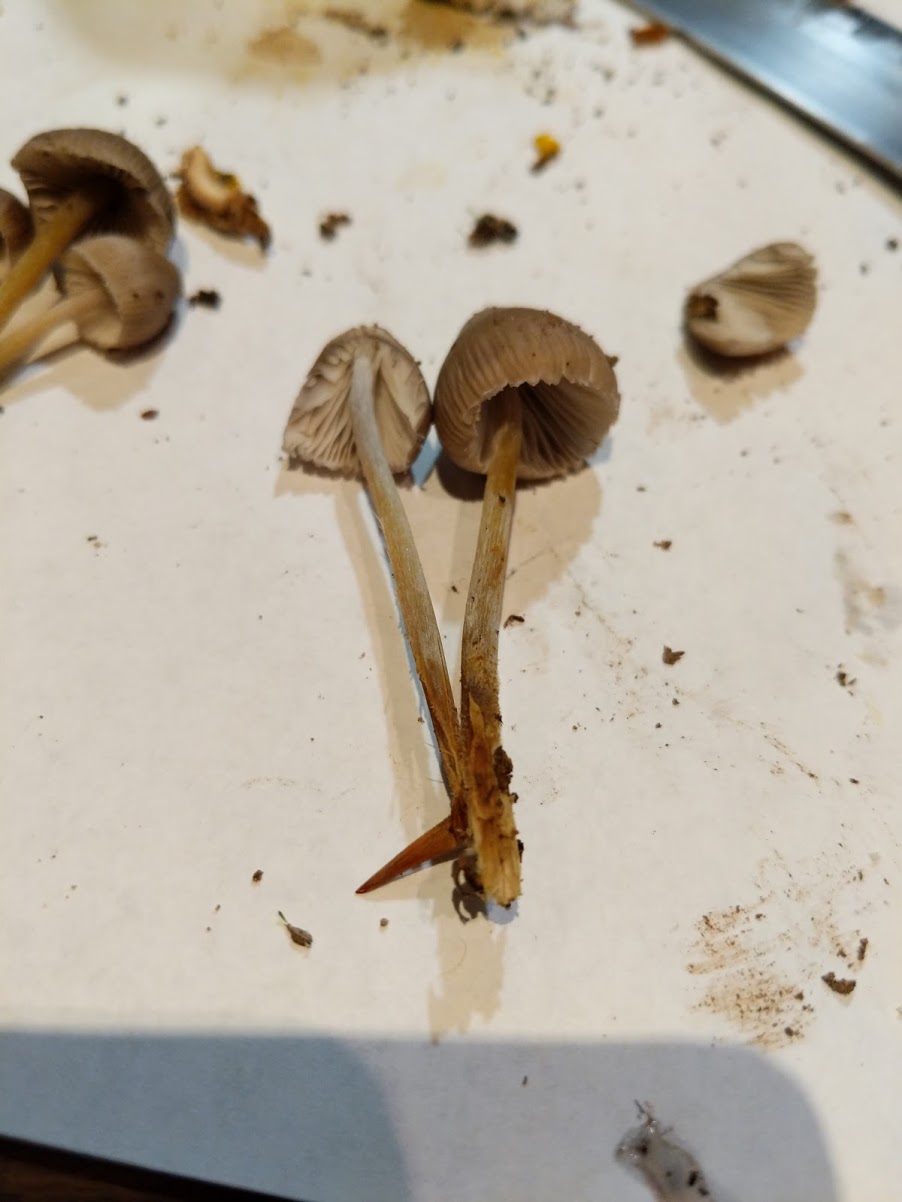
5. Mycena Species
German: Helmling
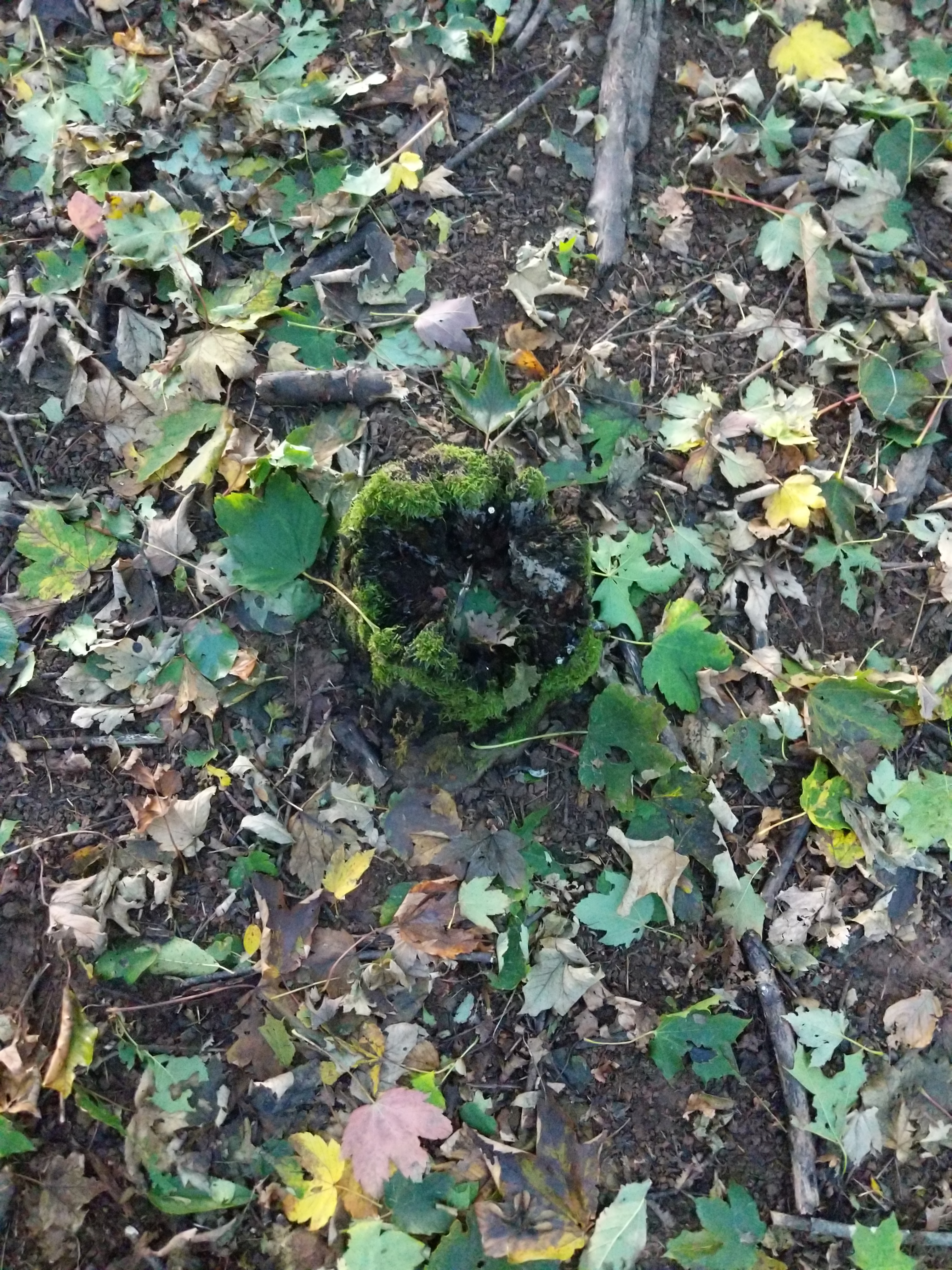
This Mycena is difficult to identify since there are possibly several hundreds of varieties. This species was growing in a clump on a hardwood stump. My best guess would be Inclinata species.
More info:
Northern Europe Mycenas: https://mycena.no/list.htm
North American Mycenas: http://name.umdl.umich.edu/agk0806.0001.001
All Mycenas: https://en.wikipedia.org/wiki/Mycena


6. “Turkey Tail” – Trametes Species
German: Tramete
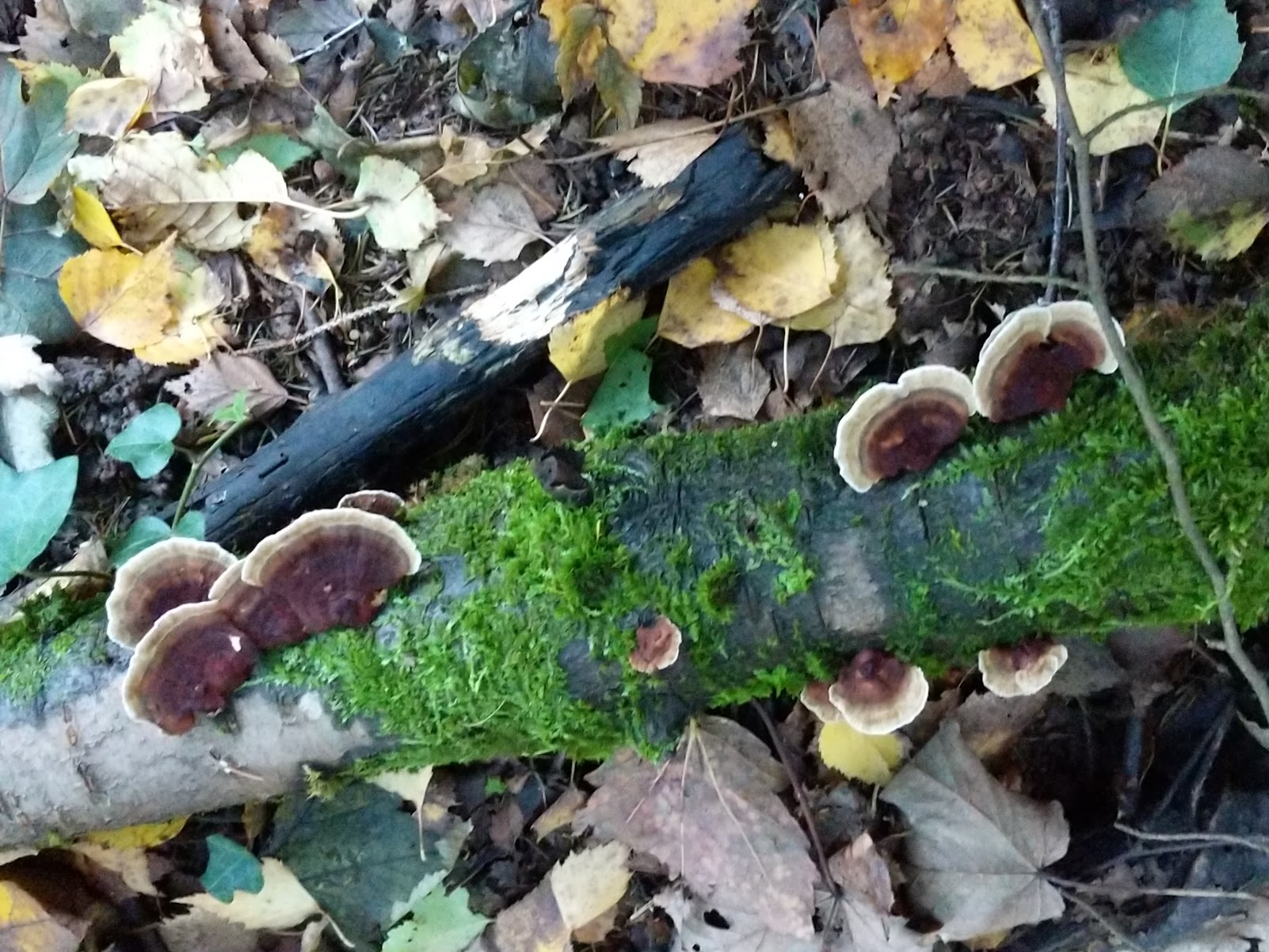
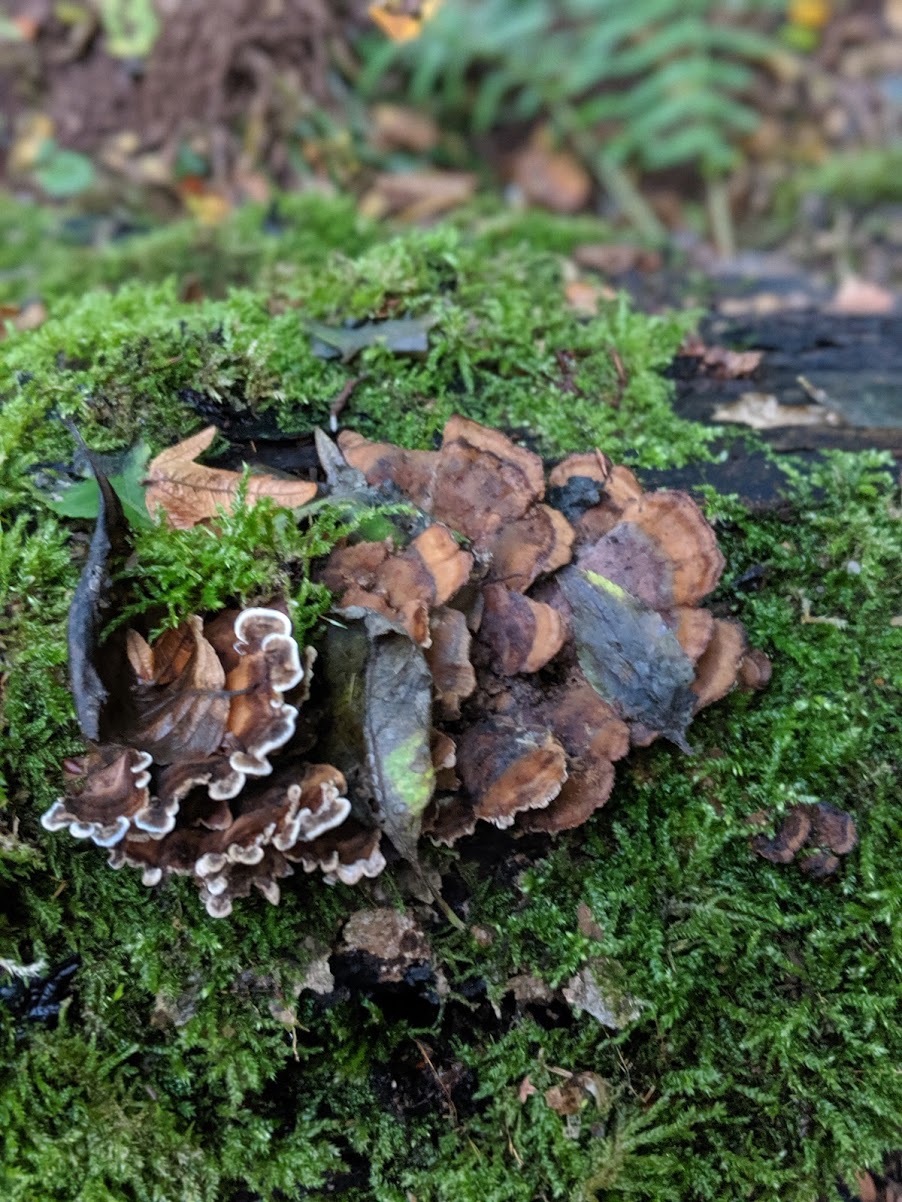
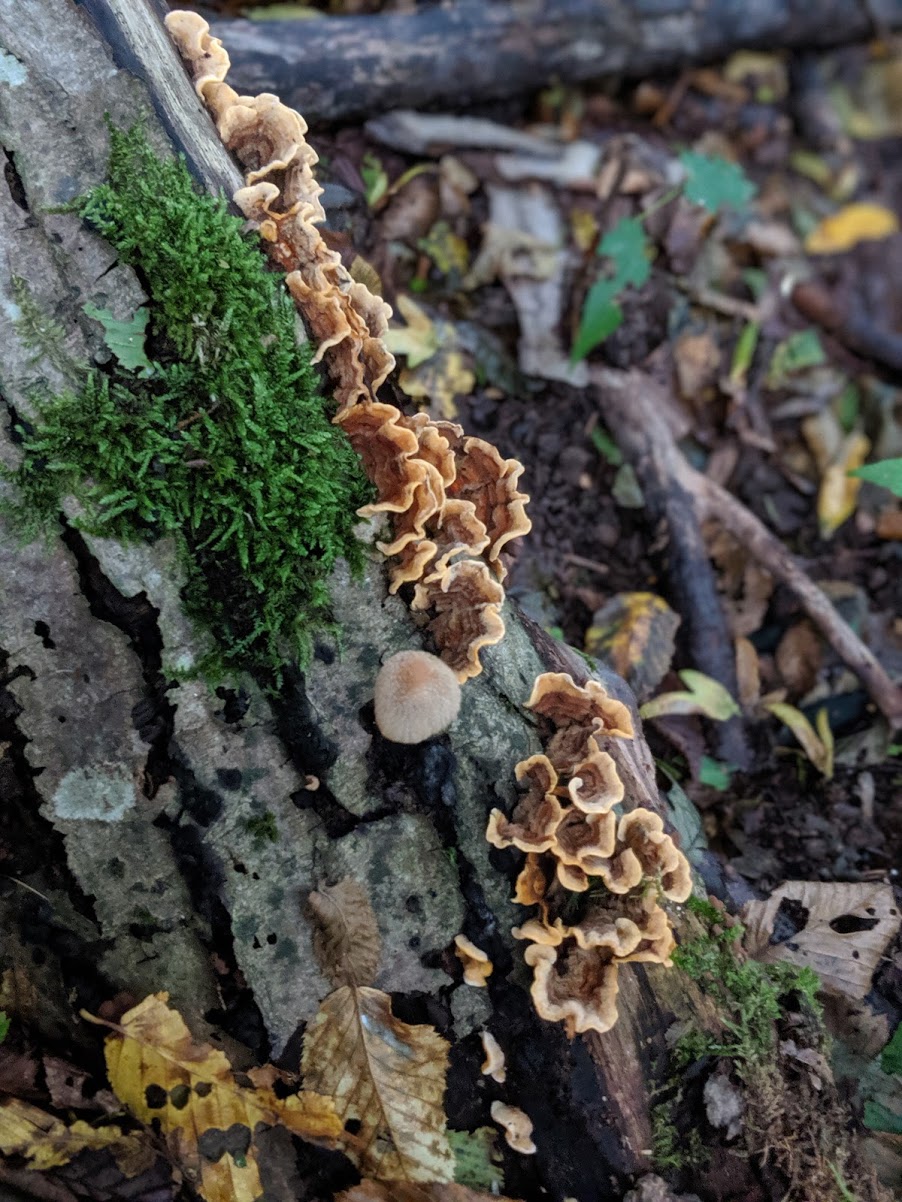
A very distinct and beutiful variety of mushrooms, I’ll have to get closer next time to do a more official test – See the “Totally True Turkey Tail Test” in the link below:
More info: https://www.mushroomexpert.com/trametes_versicolor.html
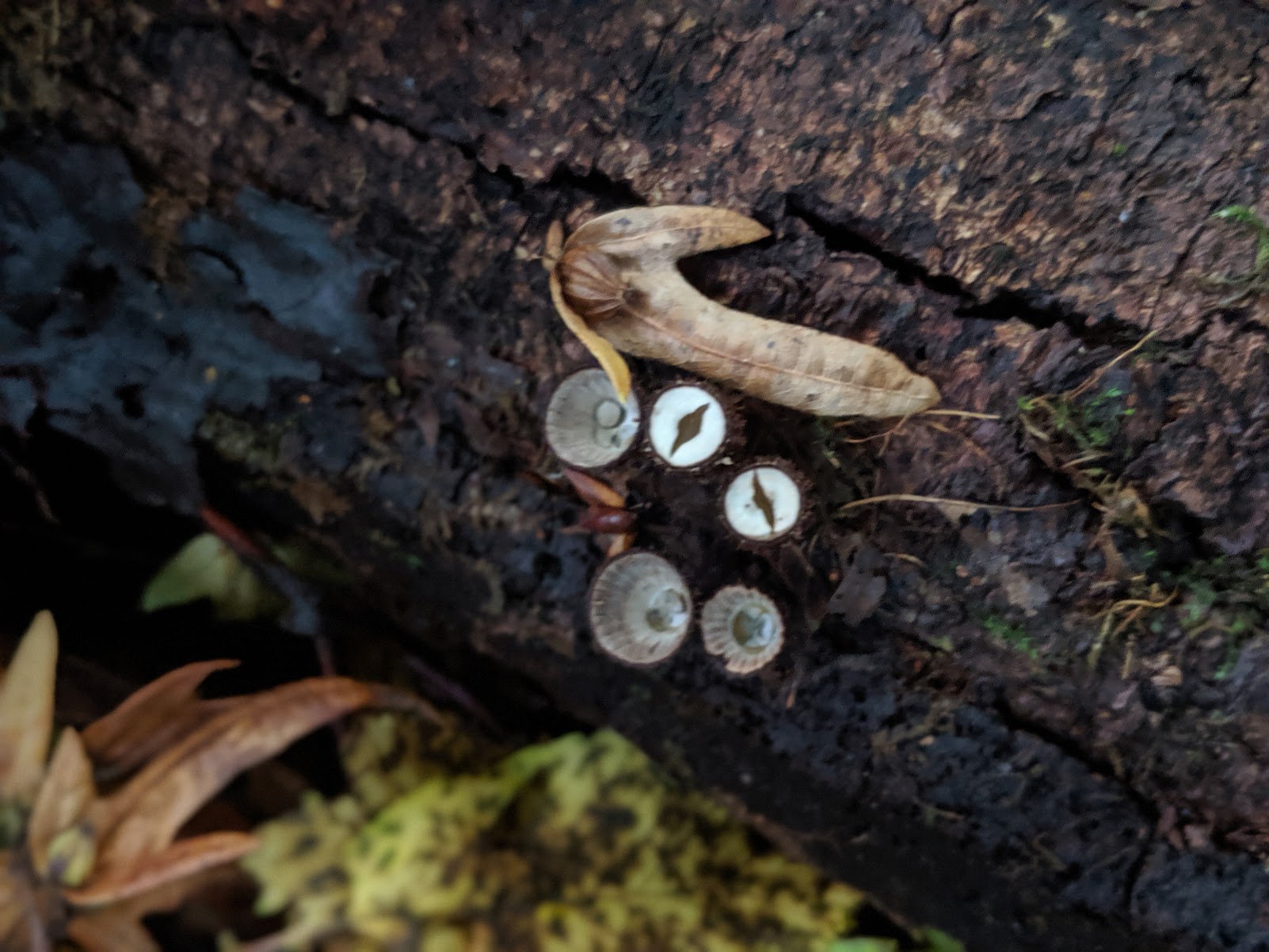
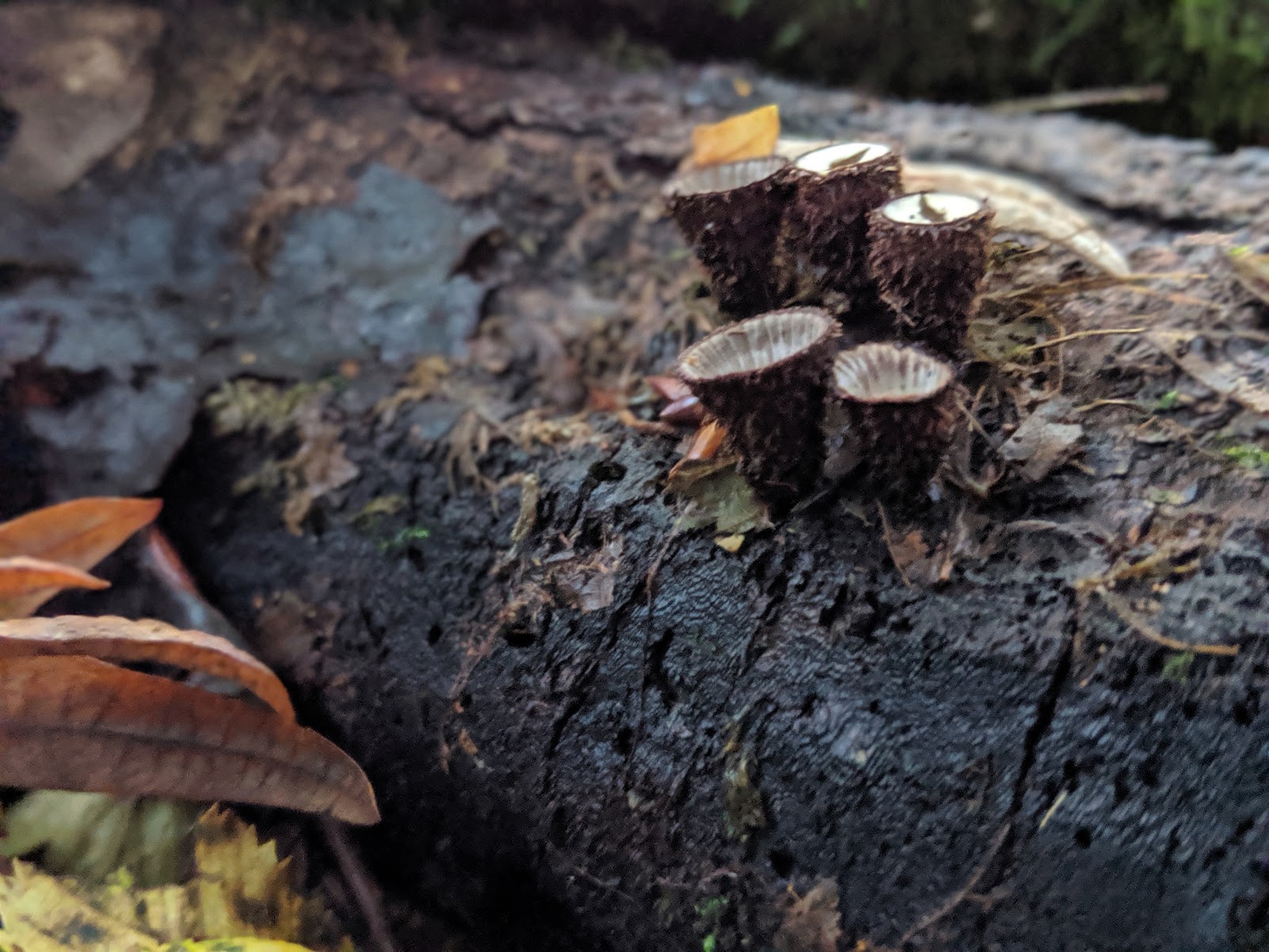
7. “Bird’s nest fungus” – Cyathus Striatus
German: Gestreifter Tueuerling, Striegeliger Teuerling
This one shows a hairy, urn-shaped cupcake with white grooves on the inside. At maturity, the cover skin ruptures and releases up to 16 gray spore containers (peridioles) which are first attached to the cup by an umbilical cord. Present on deciduous and coniferous wood. All grow saprophyitically on wood or other plant remains. In German, the name translates to Striped Turkey, so I’m wondering if the inside looks like a Turkey tail – it’s interesting that the ‘Turkey Tail” above is known in German by it’s genus name.
More info: https://www.mushroomexpert.com/cyathus_striatus.html
8. “Birch Polypore” – Fomitopsis Species
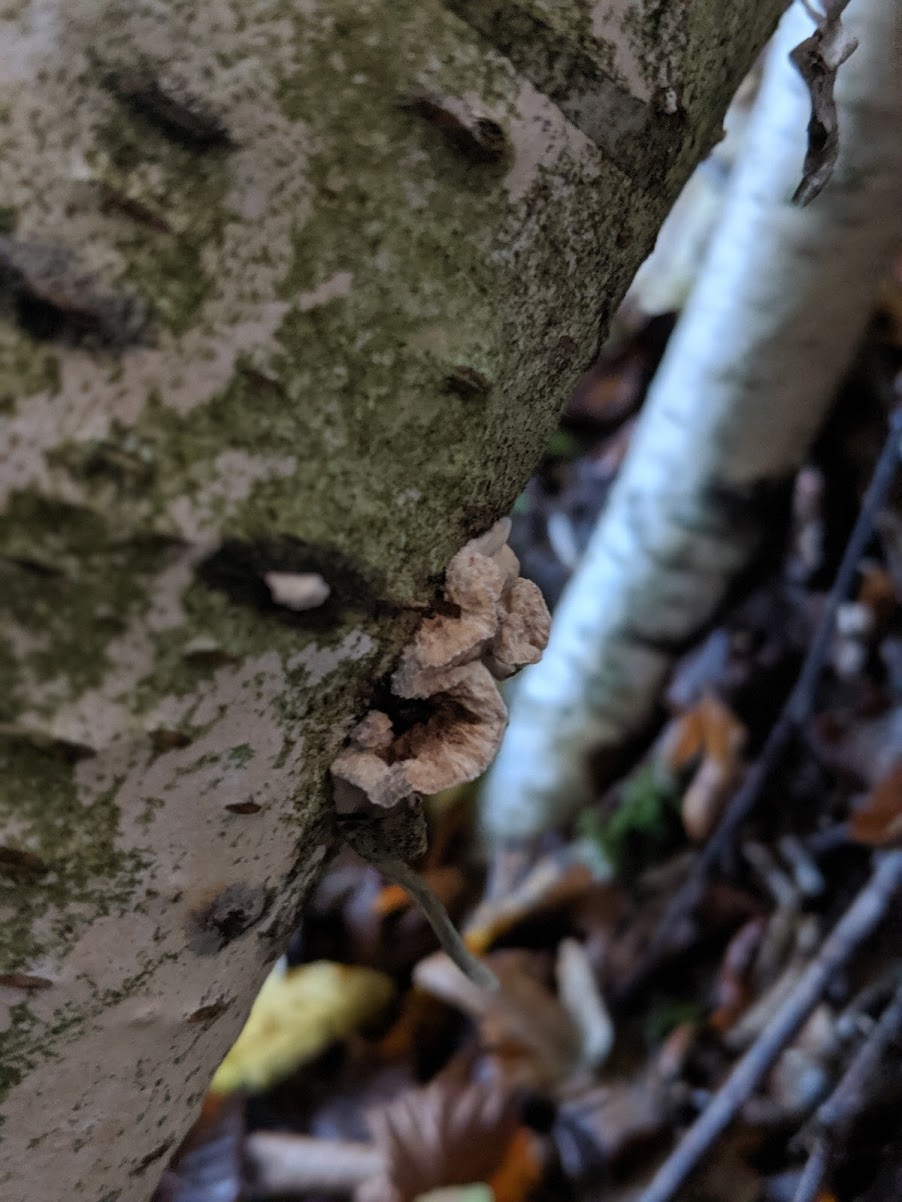
German: Baumshwamm
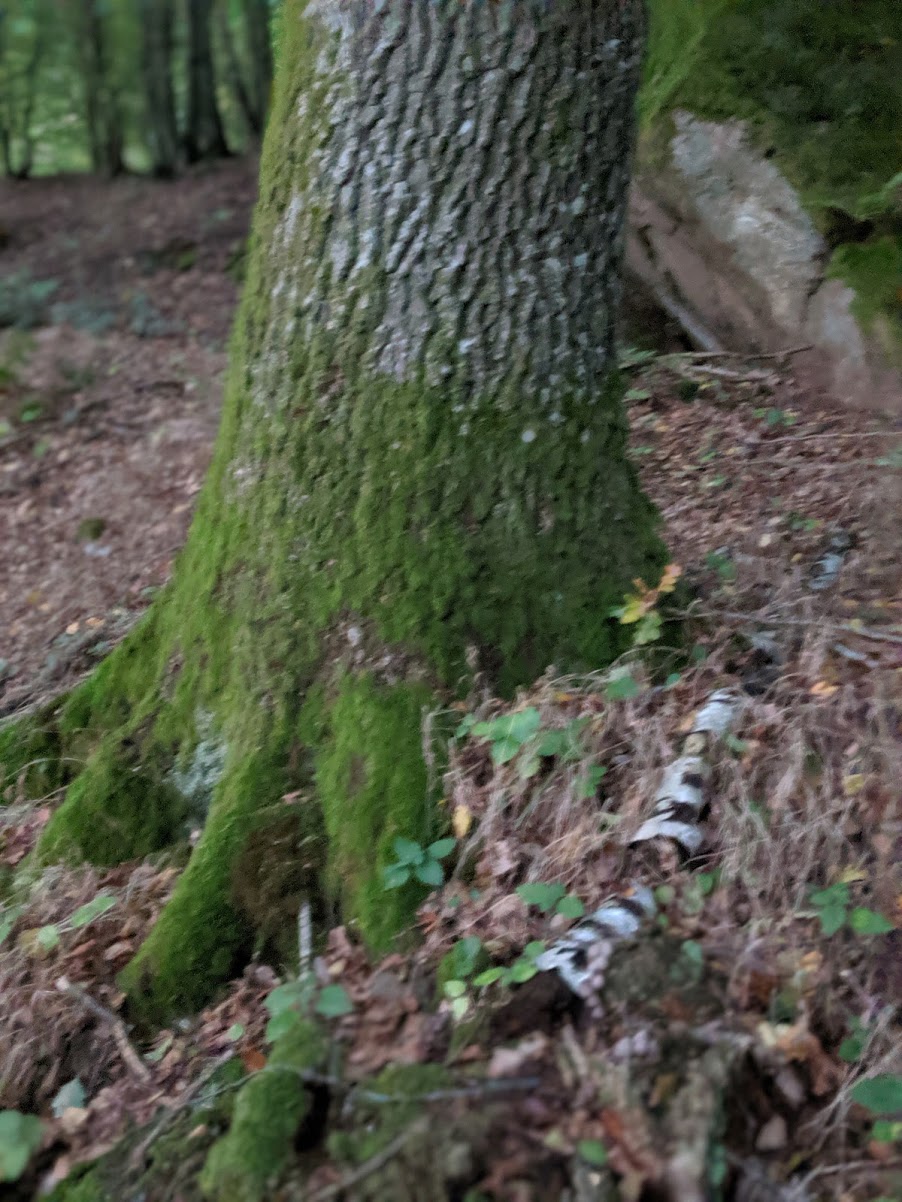
Commonly found on the distinctive white wood of the Birch tree, and formerly known as “Piptoporus betulinus” until reclassified as Fomitopsis in 2016. These little guys don’t look as large or smooth as other pictures, but it’s been drier than usual the last couple years. You can tell that it’s birch by the snow white bark color peppered with linear lenticels (which are pores allowing gas exchange thought the protective layers of the outer bark), plus the other sections of this tree were peeling off in sheets of paper.
More info: https://www.mushroomexpert.com/piptoporus_betulinus.html
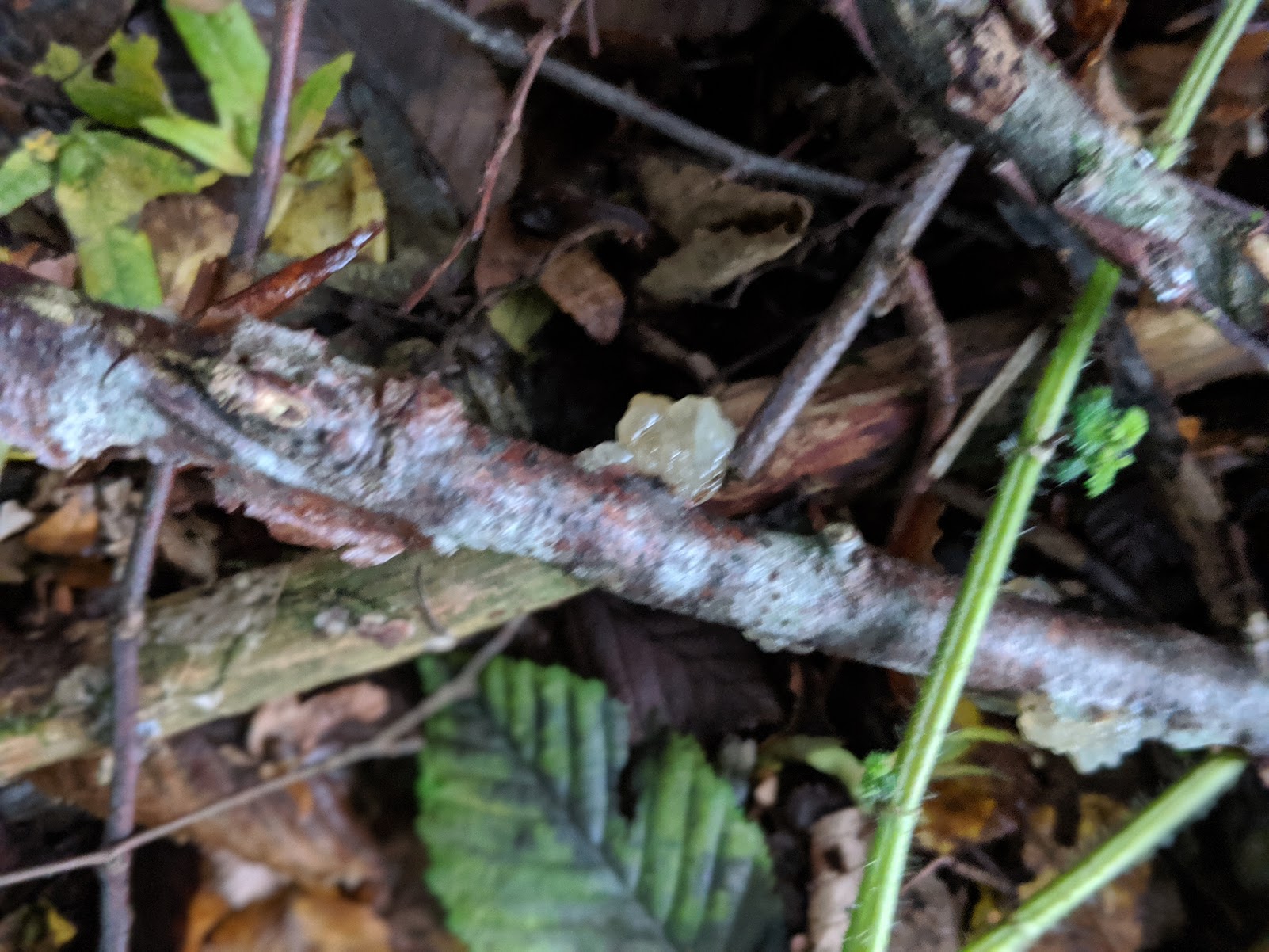
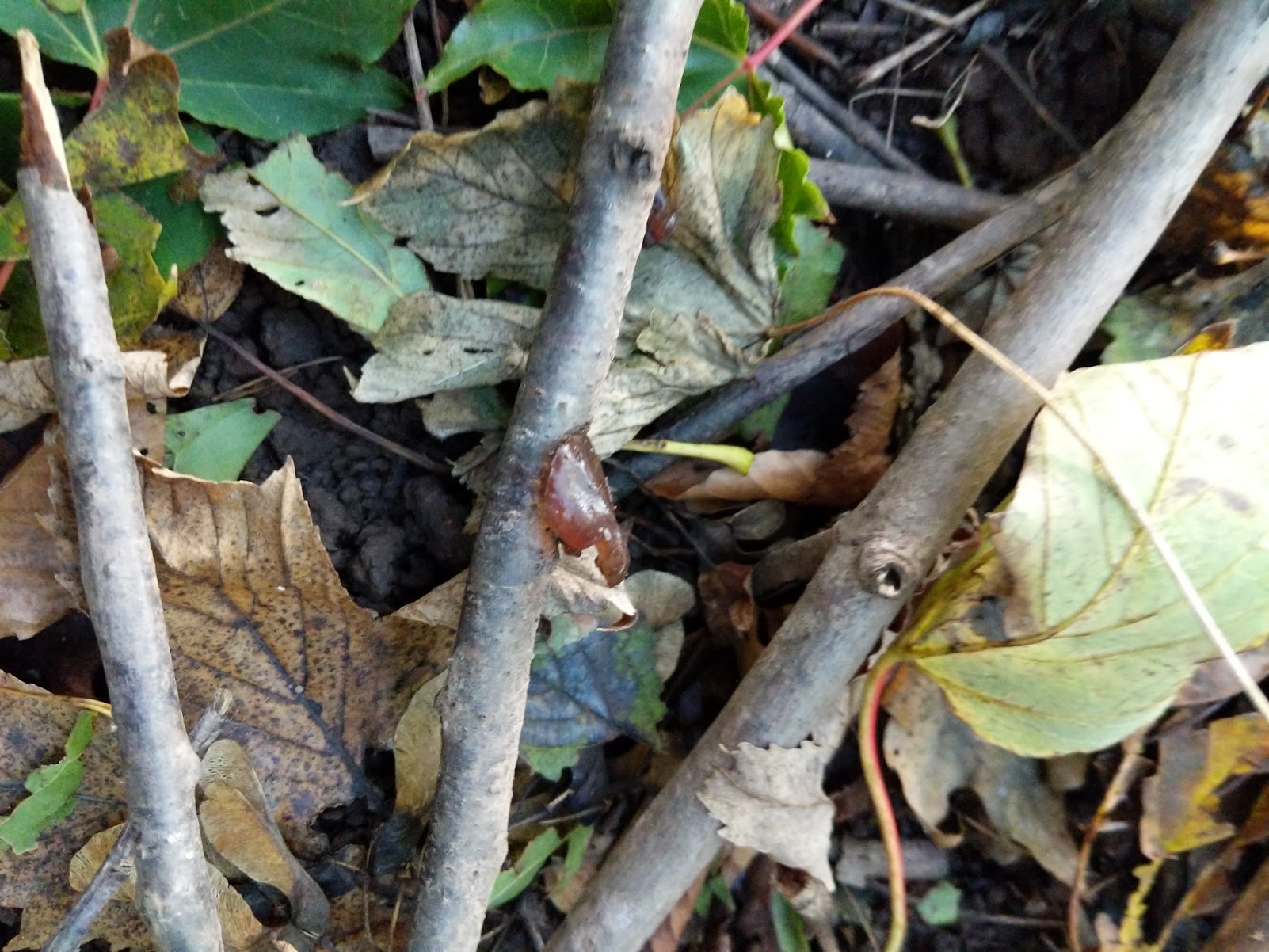
9. “Jelly Fungus”
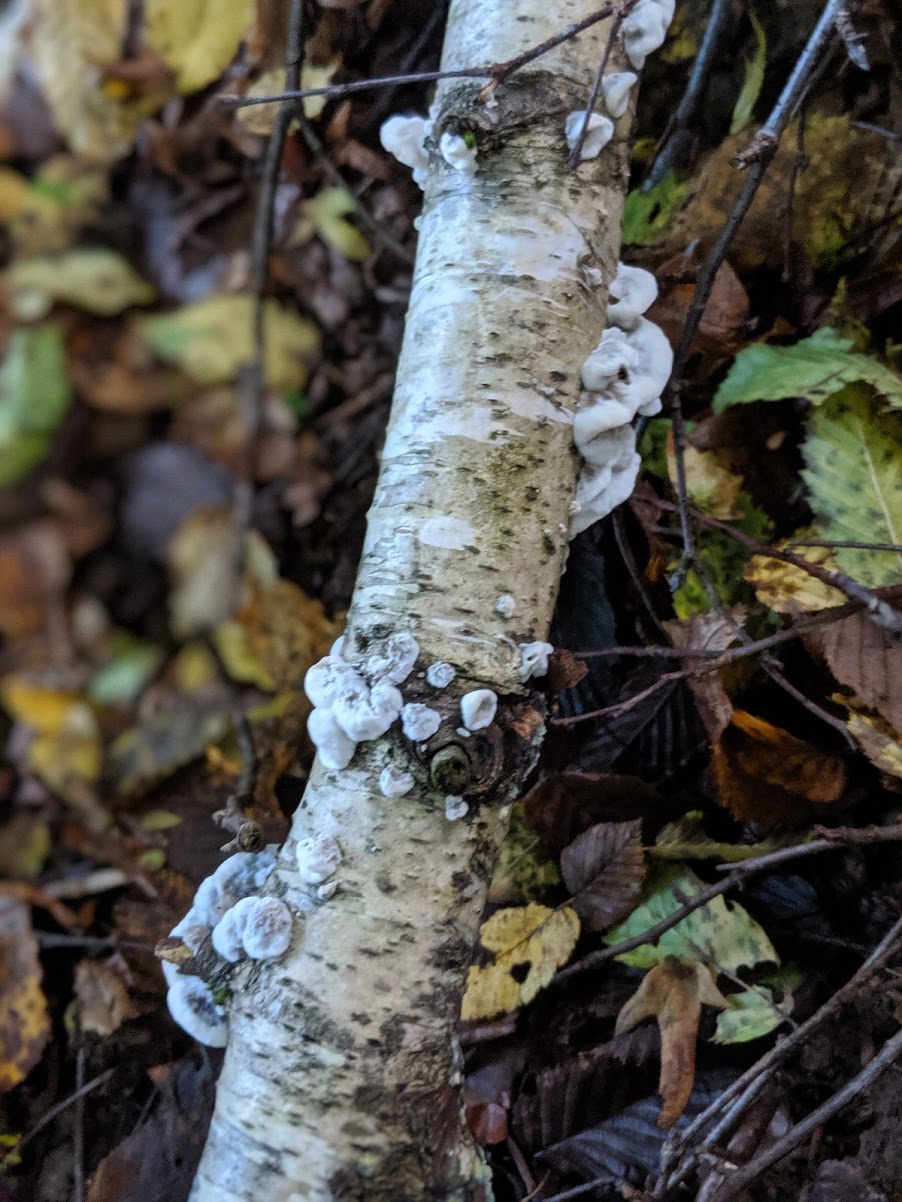
– White: Tremella fuciformis
– Brown: ?? Either Phaeotremella frondosa or Exidia Recisa
German: Drüsling
If you are collecting sticks to make a fire after it rains, you might pick up some jelly with it. These are commonly found on hardwoods after heavy rains.
More info:
https://www.mushroomexpert.com/tremella_fuciformis.html https://www.mushroomexpert.com/phaeotremella_frondosa.html
https://www.mushroomexpert.com/exidia_recisa.html
10. “Oysterling” – Crepidotus Species
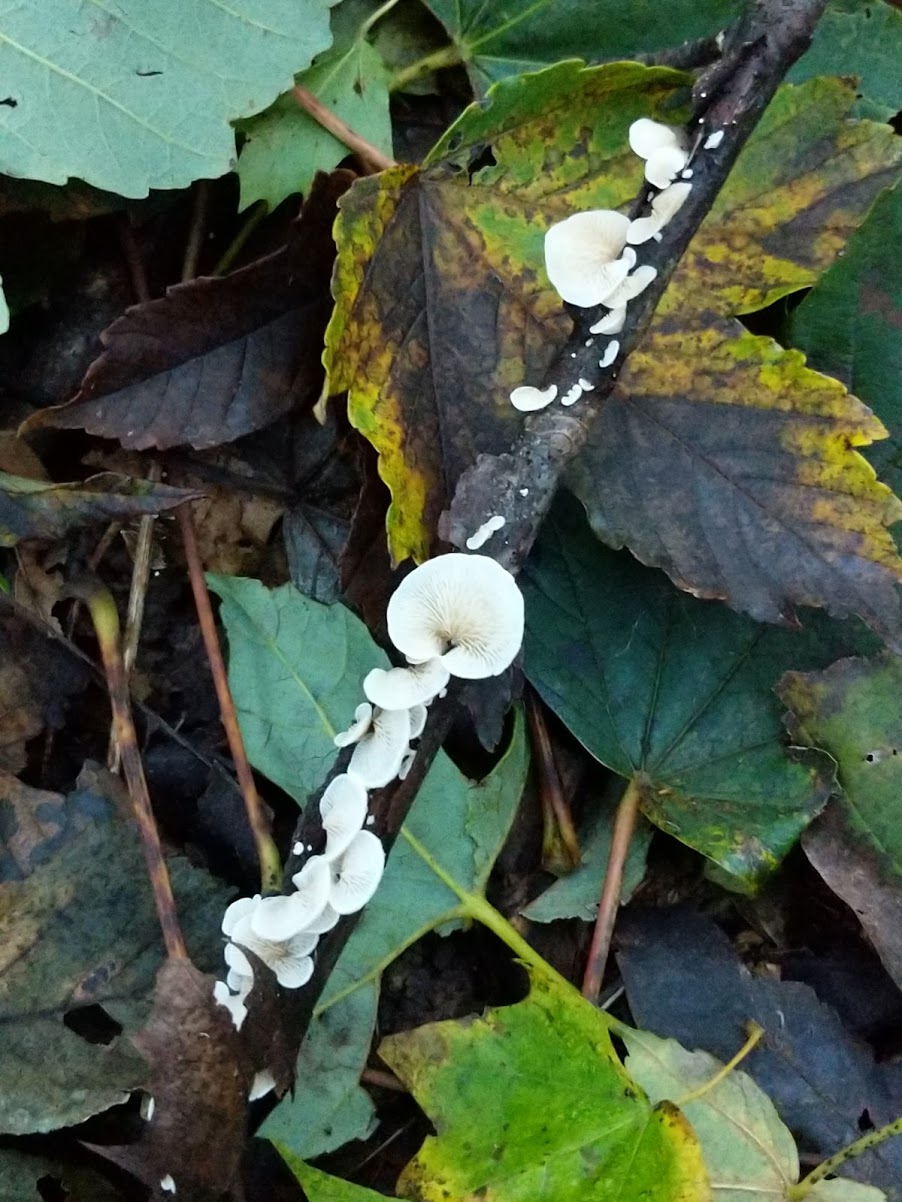
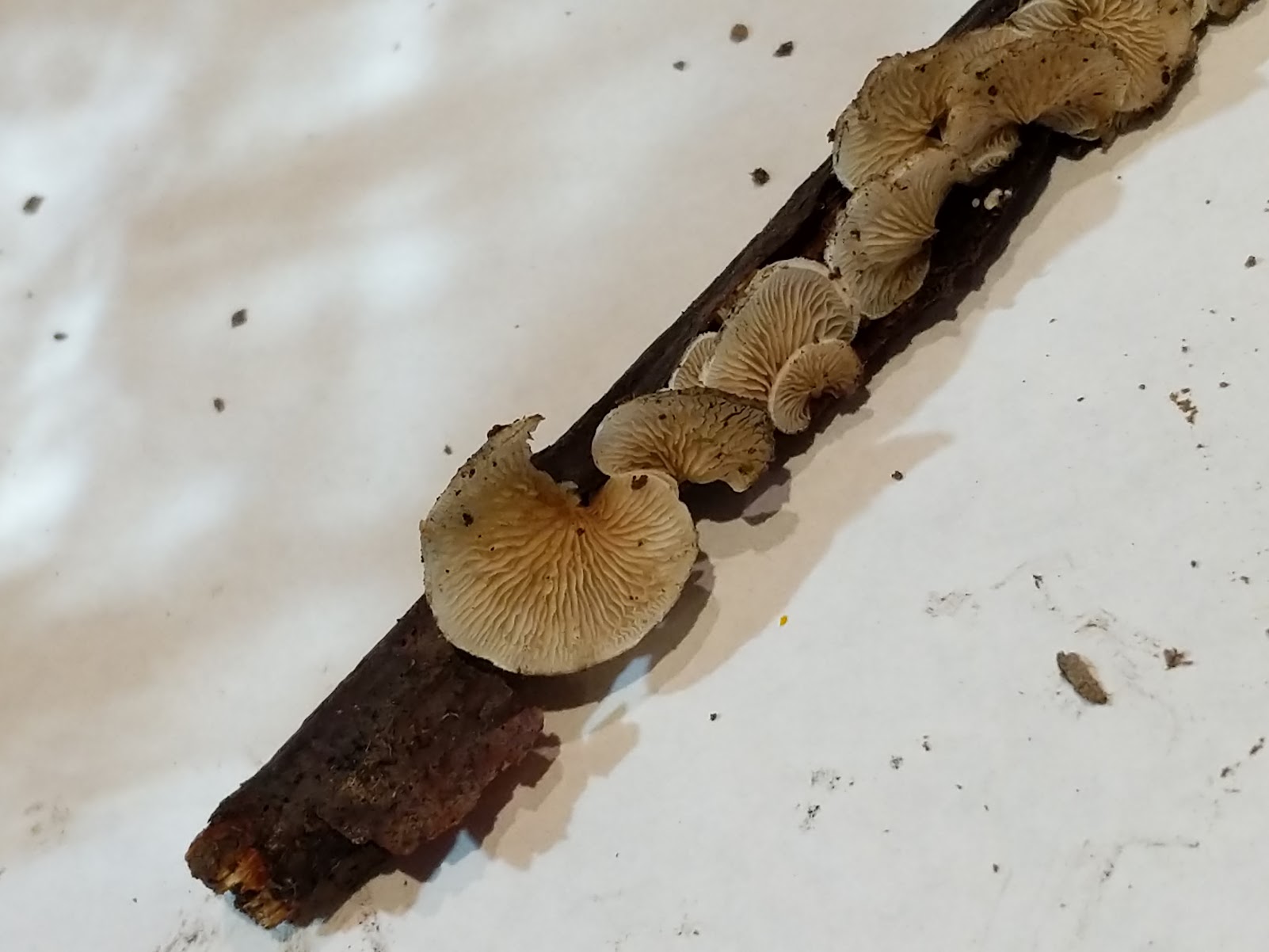
German: Stummelfüßchen
Looking like oysters, they grow on hardwoods. It’s difficult to identify which species this is, but it does look cool.
More info: https://www.mushroomexpert.com/crepidotus_vulgaris.html
 Waunder